Friday, November 23, 2018

Borderlands (PC) - Review

In the Borderlands of fun.


I've been on a streak of completing games that have been high on my "to-play"-list for many years, and I must say it feels good. Borderlands is no different, I've been meaning to play it ever since I first saw my now-ex bf play it back when it was released in 2009. Back then I was neck-deep into WoW though and had little time for any other game, something I've mentioned many times before and basically what I've been trying to rectify since.

Watching over the shoulder of my ex, I liked the way Borderlands looked. While I thought the intro gavethe impression of the game being a bit try-hard, it looked like it had some fun shooting and looting going for it. Having tried it now though, nine years later, I can say that whether you have any fun in Borderlands really depends on how you play it.

Borderlands is essentially the simplest kind of shooter. Ever heard of Space Invaders? Yeah, it's actually not many steps removed from that. You can pick from four different classes - Soldier, Sniper, Siren and Berserker. Note that I've only played the game as a Soldier so obviously this review is limited to that viewpoint. I have a tendency to choose what many say to be the most "boring" class, so maybe I should reroll and give it another go. Unfortunately what I experienced as a soldier gives me no desire to do so.

Graphics have changed a bit though.

Not that Borderlands is an awful game, even if I am really making it sound that way right now. It's just very... meh. It was difficult not to compare it to Fallout 3 and New Vegas, because they both take place in a post-apocalyptic setting with a lot of different gear, wonky characters to meet and zany enemies to fight. While Fallout 3 and New Vegas definitely also has its flaws, that's a whole 'nother post, suffice to say that a lot of the things they have got in common mostly work in Fallout and not so much in Borderlands.

What kind of things for instance?

Well, Borderlands is loot-heavy. A lot revolves around gathering or purchasing new gear and comparing it to already existing gear. Unfortunately you rarely get excited about any of it because they all feel pretty same-y. Maybe this is where the different classes come in? As a soldier I was pretty much limited to just using arms (not the ones you flail with, the ones you shoot with) but as I understood it it's not much different with the other classes, just which weapons you choose to use. In Fallout, I often use pretty much every weapon I come across at some point, giving me a lot of variety in how I choose to tackle an enemy. Here, I found that there was really only two types worth using - one spray and pray for close combat and one sniper gun for far away. The only time I swapped was because I ran out of ammo.

It's raining guns.

There are skills to put points in, but they don't feel like they make much of a difference really. Some of them are even specifically for multiplayer, and therefore pointless (pun intended) if you're playing at it alone. This says a lot about the game actually, and I will get back to this.

You'll meet NPC's, most notably probably the Claptraps (who along with the guy who seems to threaten to kill himself, because that's cool, are the faces of the game), and fight a lot of monsters, but the game is really struggling to make me care. There are also little details that just doesn't make me feel like the world is real (which is obviously a tricky word to use with something that is technically not actually real). While some things I do have a permanent effect on the surrounding, they are few and far between. Most locations are only available through teleports and so feel more like stages than actual sites. Most places in Fallout are seamlessly connected, you open a door to the subways or a vault and you are there without a loading screen in between that teleports you to a new location. It makes a world of difference for immersion, at least for me. Borderlands is just a whole bunch of disconnected areas for you to do quests in and that makes everything you meet and fight in them feel disconnected as well.

Not only that, you interact with the areas in the exact same way every time you return. Enemies come charging at you in the exact same way every time you turn the same corner. If you play this game often enough I am sure you could play it blind-folded, because there will be literally no surprises.
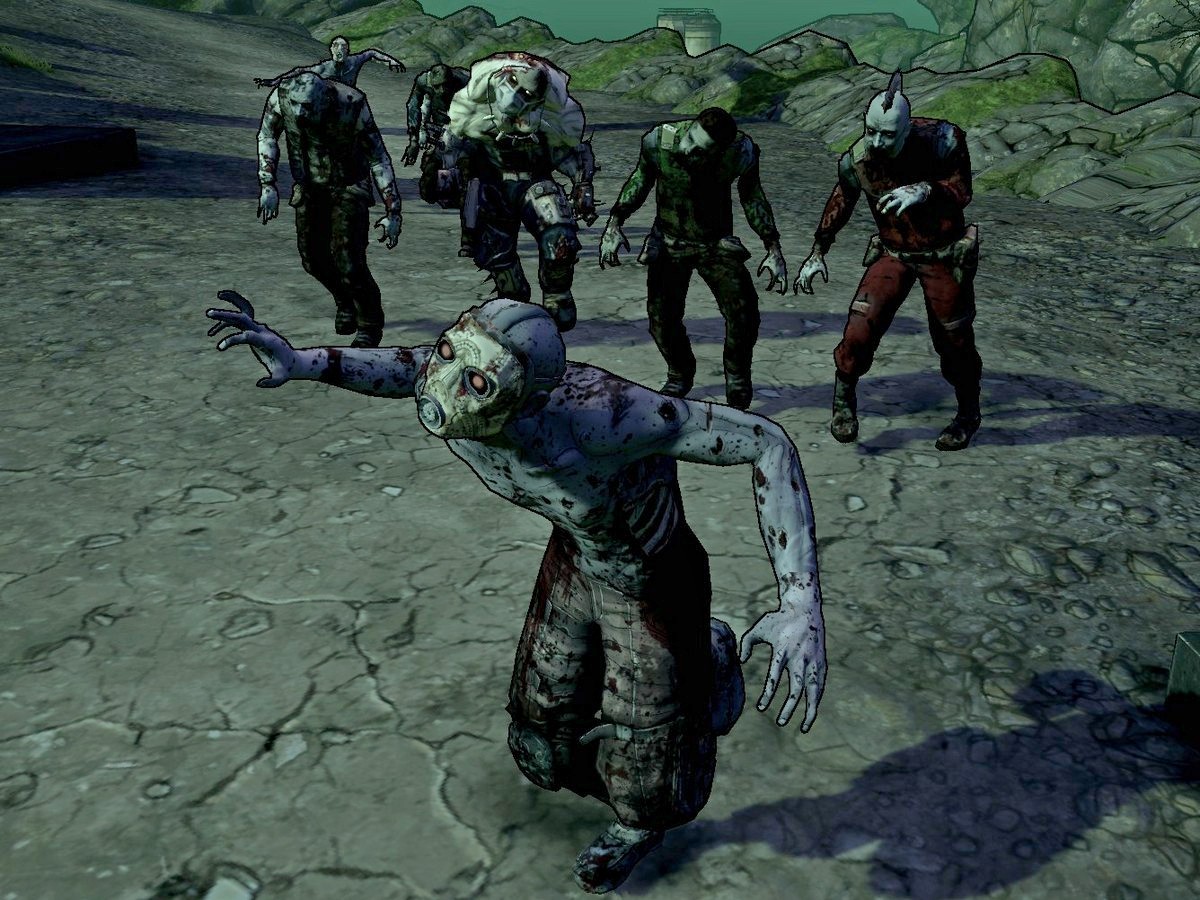
The DLC I tried were just more of the same.

And the quests themselves are never particularly inspired, at least not the lot I came across during my total of 14 hours played. While in Fallout you can find some really weird and memorable quest chains, in the eight hours I managed to get myself to play singleplayer of Borderlands I can't recall a single quest I did except for "kill named supermob X". It really wasn't much different in multiplayer either. Also, something I sort of have mentioned already, the quests seem to have little effect on the surroundings. Killing off a tribe of bandits or the beforementioned supermob doesn't mean the tribe or the moblings will be gone or changed in any meaningful way. They will still be there the next time you pass through, as if you hadn't done anything to them.

Even if I might be exaggerating reality a bit, this is exactly how it feels when you play the game - as if everything is just a giant Sisyphos project and you are struggling without a purpose. What is the goal of the game anyway? I have no idea actually. If there was a main quest chain in there somewhere, it completely failed to catch my interest.

Graphically I was happy to see what felt like a fresh take with the cel-shading, and I am sure the game would've only felt even more dull without it. While it only emphasizes the promise that Borderlands makes and can never deliver, because the game definitely looks like it could be a lot of fun, it's still one of the better components of the game. I mostly enjoyed the enemy designs as well, both gameplay wise and aesthethically. It's interesting then that combat still manages to be overall quite boring, but that wasn't down to the enemies or how they acted as such. Instead I put it down to the beforementioned issue of repetitiveness. While a fight with a group of enemies could be fun the first and second time, when you ran into them the tenth time and knew exactly what was coming, the fun had definitely worn off. And to show that the circle always is complete, I read reviews of Fallout 76 and find that a lot of the critique of that game reminds me of the problems with this game, at least regarding world-building.

Overall Borderlands left me with a feeling of almost wanting to be mindless. And maybe this isn't trying to be a memorable or awe-inspiring experience, it's supposed to just be some thoughtless run and gun fun! In many ways that takes me back to my comment about Space Invaders. You'll see and fight the same enemies over and over and maybe that is supposed to be the fun - you're simply not supposed to have to think much about what you do. And I would never have realized that might be the case if it wasn't for a funny coincidence.

The graphics are pretty much the only thing that makes the world come alive, at least a little bit.

After having played Borderlands for eight hours on my own, I decided to give it another couple of hours to wow me before I uninstalled it and moved on. As I was playing that final push, one of my oldest and best friends asked me on Steam if he could join me. Sure thing, I thought, it can only make the game better, surely.

And I was correct. The multiplayer skills in singleplayer mode had already given me the hint that this game didn't seem designed for singleplayer experiences at all. Running around with someone you enjoy playing with, allowing you to heroically save each other from gunfire or death and discuss which loot should go to which person really made all the difference. Most games are made better when played with a friend but that doesn't necessarily mean a game can't have a fun singleplayer mode, like Heroes of Might and Magic 2 and 3. Here I'd say the difference between singleplayer and multiplayer fun is almost as profound as in a Mario Party game.

But in the end Borderlands still suffers from a great lack of depth. It seems to try to mask this by showering you in loot like some sort of Diablo-clone and let you talk to wonky characters that still manage to leave no impression. Throughout my game time with Borderlands I never once thought "oh I just need to do this" or "I wonder what happens next" or even "huh, that's cool". When I play a game like Pokémon I'll look at the time and wonder what happened to the last two hours. With this I look at the time and wonder how it's only been twenty minutes.

In before someone chimes in "you should use this and that mod though"; firstly I am against a game needing mods to even be fun and secondly I really don't think mods could've fixed the issues that made the game tedious in the first place.

If you happen to have a buddy and you're looking for a game you haven't played together yet and you can find this cheap, then sure, I think it could provide you with a decent amount of fun for a decent amount of time. Otherwise, there is a lot better things you can do with your time. Play Borderlands 2 maybe?

Saturday, November 17, 2018

Lifeless Planet (PC) - Review

Joyless Planet
With zpoilerz.


I don't know guys... This one was a bit difficult for me to write, because I want to say nice things about it but I just... can't.

Let's see if I can find somewhere to start. I am a pretty big sci-fi nerd. Put the word "space" or "planet" or any other astronomical phenomenon in your product and I will probably be interested. I am pretty sure that is how I got my eyes on Lifeless Planet. Apparently I must've let the name woo me enough to buy it, because I did not read the plot synopsis on Steam, nor watch any images, revealing that you find a Russian town on this lifeless planet and thought that was a genuine plot twist (albeit about three minutes into the game) at first. While it's not a plot twist as such, uncovering why there is a Russian town on the planet is one of the driving forces of the story.

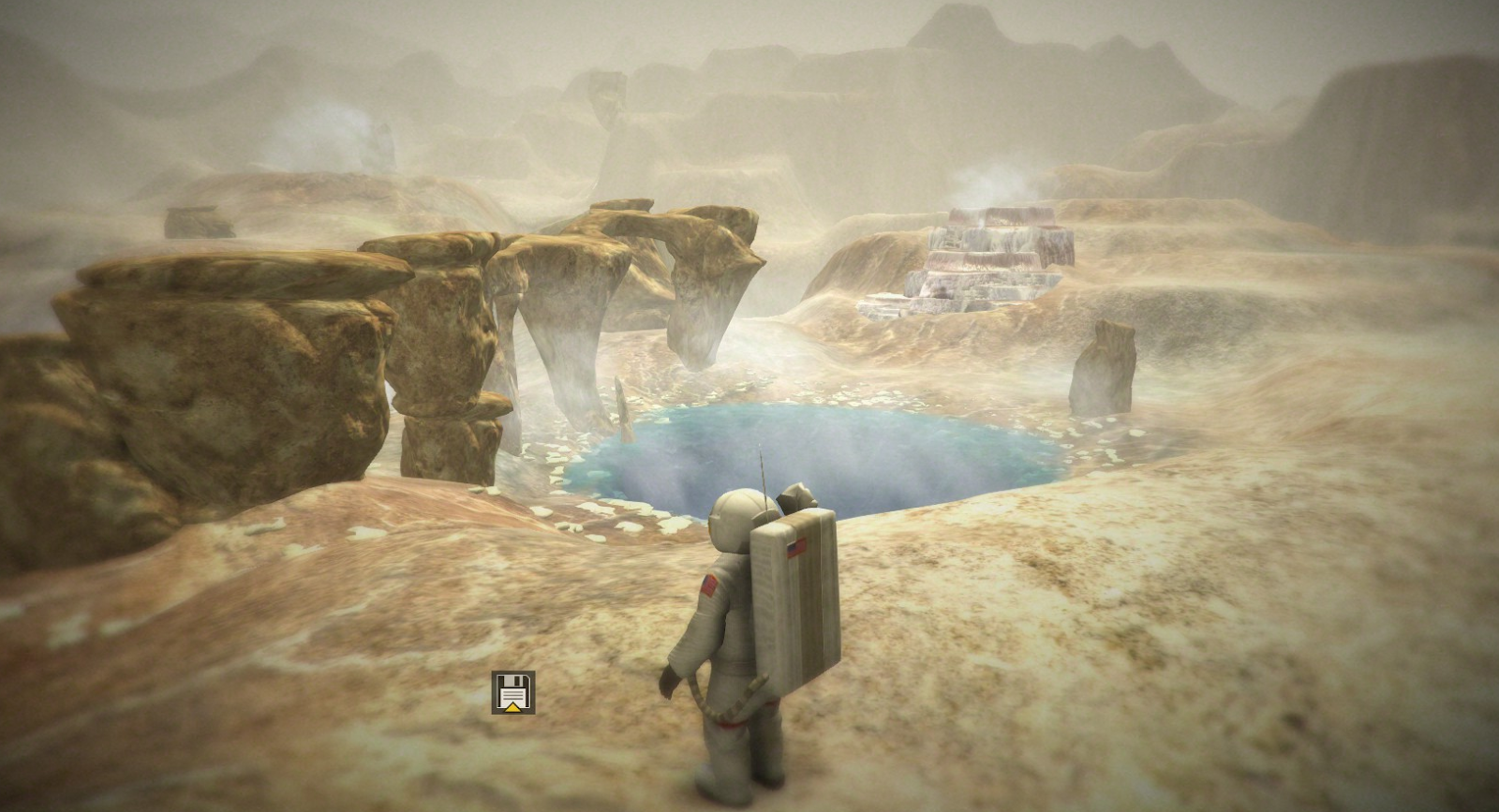
50 shades of brown.

You play as an American astronaut who wakes up after crash landing on a planet that you've been travelling towards with two colleagues. They're gone and you're about to suffocate. Good thing you've got the solution to that problem in your immediate vicinity and it literally takes no effort. That should be your first hint that this game isn't what you hoped for it to be, but you will trek on. You will think "oh boy, this place is ugly and boring to look at, but it's lifeless so that makes sense I guess". Maybe that will even make you excuse the fact that the game is sporting basically Playstation level graphics. Not Playstation 4 mind you, PSOne. Graphics are often the last thing I care about as long as they're functional enough to play the game, and here they work well enough in that regard. What I often forget about tedious graphics however is that they can make a tedious game even more tedious. See what I did there? Repetition is tedious.

Pretty immediately after you set off to find your lost colleagues you encounter buildings that look strangely familiar. They're clearly built by humans, so now you've got two mysteries on your hands. Why is the planet lifeless (because of course you didn't set out to explore a lifeless planet) and who got here before you? It takes another two seconds (I am exaggerating, but not by much) to find out that the Russians got here some decades before you through some portal. Sounds pretty promising right? Unfortunately that is as good as it is going to get.

Yay, platforming.

The major problem with this game is that it just doesn't know what it wants to be. If it had settled on being a walking-simulator á la Gone Home or What Remains of Edith Finch and just focused on the story I think this could've had a lot of potential. But for some reason they've thrown in platforming. So much platforming. So much pointless platforming. Pointless because it's hardly ever a challenge and it always feels as just a way to make you travel from point A to point B or from unrealistically placed audiolog to unrealistically placed audiolog.

I usually love audiologs. I know a lot of people don't and think they're overused at this point. That's bullcrap, I think they're still a great way to convey story - but that doesn't mean you can just let them lay around anywhere you think it's time to continue the story-bit of your game. This game does this all the time though, and it's just structured so badly. You'll get to a platforming part and right before it you receive a tool to traverse through and right after the tool is snatched away again (until next platforming bit where it is specifically needed) and now it's time for some more story-telling so let's leave an audiolog lying around in the middle of nowhere for the player to find. It feels forced and unnatural game-design wise.

I think the bad structuring of the game is affecting the structuring of this blog post.

You'll get another tool that will allow you to move rocks from a little crevace to another crevace and that feels pointless too because there is just no challenge to it. Imagine if in the Mario games there was a switch that you needed to stand on at the end of each stage before you could enter goal. Not out of range or hard to get to or anything, just right there next to the goal.

And here is an invisible wall, preventing me from going in this direction.

A couple of times you'll get the prompt "NEW OBJECTIVE: You're running out of oxygen, find an oxygen source before you run out". This could've been interesting if it wasn't solved by the oxygen source often being only a few steps away. I have literally no idea what the purpose of these sections are.

The story is the best part of Lifeless Planet, but it's not given any time to grow, shine or even make much sense. And there is so much potential here, but other than the nameless protagonist and a Russian alienplantwoman (don't ask) there are no characters and even these two are as flat as a sheet of paper. The astronaut has a subplot about his wife that also doesn't amount to anything. Apparently, before the astronaut leaves for his mission, she goes missing in the forest by their house and when he finds her unconscious, moss has started to grow on her toes. How long has she been unconscious for?! But this doesn't lead anywhere or affect the game in any way. Maybe it is meant to make us understand the astronaut's choice to leave Earth and venture into space and... I really have to struggle to over-analyze the thinly slized pieces of story that we're gotten here. Each new revelation is thrown at you without much or anything inbetween making them feel grossly under-explained. This is actually well illustrated by the fact that after most of the cut-scenes you are inexplicably thrown into a completely different area and it's always very confusing. In one instance it's even suddenly night. Or the fact that you'll find random buildings and other derelict structures standing around without any consistency or sense of realism.

You never once feel like you're walking a planet that has been through what the audiologs tells you, every part feels like it's been designed to give you the next platforming "challenge". Over and over the game fails both at the story-telling, because it just doesn't sell the story with its setting, and the platforming because it just doesn't hold any challenge.

Here are some other random annoyances;
  • Why do you have a "Save & Quit" option when it doesn't actually save? You'll be thrown back to the nearest checkpoint, which admittedly rarely is far off, but also almost always means you have to replay some part and thus is the opposite of the meaning of "save".
  • Why can't I strafe? With all that walking you'll really miss a strafe option.
  • This game has way too much running. All the platforming just feels like you're running, and in-between the platforming there is more running. It took me 5 hours to finish and it could've been done in two with some tighter writing and a whole lot less unnecessary platforming. It most likely would've left much less of a "meh" aftertaste too.

Similar concepts, completely different results.

I feel like this game really wants to be Another World, with its mysterious otherworldly setting and one-hit kill platforming challenges, but it fails in execution. Like I said in the beginning, I want to say some nice things about it too though. The checkpoints are very generous, which is nice because even though the platforming isn't challenging you'll die plenty from clunky controls and/or hard to judge distances. Oh, guess I went back to complaining again.

I really like the soundtrack, which actually puts down a great ambient sound that helps you endure all the brownish graphics you're about to experience. And Bob Carter who voices the astronaut has such a nice voice I really wish he had a lot more lines than he does.


Interestingly enough, Stage 2 Studios that made the game aren't your average game studio. Looking at their homepage (they don't have a wikipage from what I could find), they seem to be focusing on science-apps and movies and Lifeless Planet is meant as a way to promote interest in science and space-exploration. Well I am sorry to say, that is probably one of the last things it does!

For some reason I decided to finish this game, and I think that was purely on the fact that it was basically just to run through. But those are still five hours I actually wish I had put into something else. Here's a suggestion; Develop that story into a novel and I will gladly spend five hours reading it while listening to the soundtrack.

Thursday, October 25, 2018

Four Last Things (PC) - Review

More heaven than hell.


In the infinity of things it was probably inevitable that someone would take a closer look at renaissance paintings and think to themselves "hey, these are pretty whacky. Wouldn't it be fun to make a point & click adventure game set entirely in these paintings?". That someone is Joe Richardson and that game is Four Last Things. It is exactly the kind of thing I would use as an example of something that is either a stroke of genius or completely bonkers - but Joe Richardson wasn't the only one who thought it was a good idea, as Four Last Things is a Kickstarter-backed game. Let me say this though - it is a good idea.

I can't say I know much about art, or that I am overly interested either. I listen to an art podcast however so I guess that puts me slightly above average in interest-level even though it's more because of my massive interest in everything history and less about art specifically. In the end it really doesn't matter if you know or don't know anything about renaissance art when you play this game. If anything, if you go into this purely because of your love for point & click adventure games, you are likely to come out of it with a curiosity of renaissance art. Because boy are they weird.
Richardson seems to have been especially inspired by the works of Hieronymus Bosch (Four Last Things refers to a work by him), and it's not hard to see why. Just look up pretty much any of his artwork and you'll probably find a painting worth poring over for quite some time. Unless you know all the intricacies of renaissance symbolism, chances are they are going to make absolutely no sense.

Your guess is as good as mine.

The game itself is not big, it only contains around two dozen different screens to interact with. Each screen is a patchwork quilt of paintings, with certain parts simplistically animated. Richardson has clearly realized how absurd the whole idea is, because this game does not take itself seriously. If you're worried a game about renaissance art is too high-brow to be fun, you can stop worrying right now. The wikipage says PC Gamer called it "Monty Python"-esque and that is definitely a very fitting description. The writing is surprisingly fun throughout and probably the games biggest strength.

The story is simple but effective - you play as a character who has come to the church of Heavenly Peter, seeking absolution for having committed the seven deadly sins. The bishops tell you that the sins were done outside of their jurisdiction and so you need to re-commit them in order to be absolved in their church. Re-committing these sins is the entire game, meaning it is not very big, because we all know sinning isn't something that requires much effort. I finished it in 1,5 hours, admittedly I required some help for some of the puzzles meaning that if I had had the patience to try and solve them on my own the game would've probably lasted around twice as long.

That is not to say the puzzles are particularly difficult or unfair, on the contrary - I found the puzzles some of the most well-balanced I've encountered in a point & click adventure in a long time. Even though I am a bit too slow-witted to figure them all out, you are definitely given the right type and the right amount of clues to figure out most of them without having to make big leaps in logical thinking, especially if you're accustomed to a point & click-think. While they range from silly simple (and this is also pointed out in the game) to trickier several-step puzzles, you won't find any red herrings here. I wouldn't have been able to figure out the riddle in a million years though.

Looks overwhelming at first, just like good renaissance art should.

Each screen is accompanied with its own classical renaissance-tune, played by some character or characters in the screen. Each tune is mostly just a short jingle on a loop and I can understand why Richardson thought there needed to be a lot of variation, because every single tune wears on your ears pretty quickly. Fortunately you don't spend enough time in each screen nor with the game to become too annoyed by it (big ear-worm warning here though).

You control your character by  (surprise surprise) clicking on objects in the surrounding that are interactable, this gives you an action-wheel a la Full Throttle to either use (hand), talk (mouth) or look (eye) at or with something. Your items are handled in a drop-down menu. This works very well but you will find yourself with little reason to look at things (other to hear the witty description of it) and you won't pick up and handle many items. Most of the game is solved by talking to people. Unlike with some other P&C games I never struggled to find what objects were interactable nor where I could go next. I did encounter a bug of some sort where I wasn't able to interact with anything in the screen. Right-clicking makes your character do a somersault (to no apparent use in the game as far as I could tell) and only after doing that did the controls work again. I have no idea if this is working as intended, but it only happened twice and was barely an inconvenience.

In the end the Four Last Things comes out as something I am glad I have spent some time with. It's entertaining, and dare I say maybe even a bit educating. If you're into odd video games, renaissance art and/or point & click adventure games you could do worse than to spend a few hours with Four Last Things. It doesn't have much, but what is there is unconventional, witty and well-designed. And there is something to rewarding an oddball idea such as this one with your time and money.

Friday, October 5, 2018

Paper Mario: Sticker Star (3DS) - Review

Stick it where it don't shine.
Rage-filled spoilers!


I love the Mario & Luigi games. They've got great characters, fun stories, interesting gameplay and exciting worlds. Don't worry, you're not in the wrong review. I'm just listing things that Paper Mario: Sticker Star could've had, but doesn't. Paper Mario: Sticker Star, or PMSS as I am fittingly going to abbreviate it, because it made me rage like I had PMS, has flat characters, a boring story, nerdrage inducing gameplay and tedious worlds instead.

After 20 hours and almost at the end of the game I just slammed my 3DS shut and decided enough was enough. The game had made me angry for the last time, and I wasn't going to deal with any of its bullcrap any longer. Those 20 hours had been filled with me going "what the heck am I supposed to do here?!" and then "how on earth was I supposed to figure that out?!" after googling the answer. I am daft with game logic at the best of times, and often find I want to kick myself in the backside when I can't figure something out. Not so with PMSS which I thought was genuinely unfair. I'll give you some (un)funny examples in a moment, but first let me explain to you how I ended up playing this game.


Again, I've got to mention the Mario & Luigi games. The RPG-series in which you play Mario & Luigi through some of the weirdest places have been a truly entertaining one for me through all the games I have played so far (which are Superstar Saga, Partners in Time and Dream Team Bros.). It made me think that maybe the Paper Mario series would be worth checking out, and the easiest for me to obtain without selling a kidney was PMSS (since I don't own a Wii or WiiU).

I was immediately disappointed when it turned out Paper Mario isn't an RPG at all, which I had for some reason gotten into my head. I wasn't going to let that stop me though, since I play loads of games that aren't RPGs but it definitely made me wonder if I had any clue as to what Paper Mario was at all, or if I had been thinking of some other game all along. This review might also make you think I am an easily angered person, but I am really not. I am usually serenity incarnate, but this game made me tap into

The schtick about PMSS is that not only is Mario and everything around him made of paper (which I find is a fun and interesting aesthetical idea) but everything you do also revolves around stickers. Combat, which is similar to that in the Mario & Luigi games in which you're required to time your attacks and blocks to increase damage done and reduce damage taken, is done entirely by using stickers you find around the world and buy from the store. These stickers can pretty much be anything. From your down to earth stomp and hammer pound, to more esoterical items like Fans, Vacuums and Scissors. And this is where some of my biggest issues with PMSS rears its ugly head.

I don't even want to get into the story, because it is completely pointless. In essence however, you set out to rescue some royal stickers because of reasons. You get a side-kick sticker named Kersti who quickly tells you about something called "paperization". Paperization basically allows you to manipulate the world in different places with the help of stickers. It sounds pretty cool on paper (no pun intended) but doesn't always work so well in action. Sometimes these paperizations are necessary to advance the game and almost always it's extremely unclear which sticker it is you need to use. If you use the wrong one, it disappears and you have to go back to wherever it was you found it and pick it up again (something I didn't even know was possible until about a third into the game).


Let me explain the scenario here. You get to someplace in the game and you don't know how to advance. The first and easiest thing to figure out is that you probably need to paperize somewhere. Finding the right place is also rarely an issue. But you're only presented with an empty box and no inkling as to what sticker should go in there. This is especially infuriating during boss fights, because some are unbeatable unless you figure out which sticker needs to be used.

Here's an example; you fight a big cheep cheep about half way through the game. Almost immediately the fish jumps far out into the water, out of reach of your attacks. Not only might you have lined up some of your best stickers to hit him, which will now fizzle and be wasted, you also can not hit him and will die unless you figure out a way to get him back to you. The solution is a fish hook sticker. That sounds completely logical right? Sure enough, but only if you've already found the fish hook sticker, which is hidden in a completely different level. If you, like me, stand there without that sticker you have to just realize that "hey, I should probably have a fish hook here", then go to every stage and try to find the secret place where a fish hook, that you don't even know for sure is in the game or the solution to your boss fight, might be. This obtuseness just goes on.

In a later stage you need to find a sticker piece hidden underneath a pile of garbage. The solution is to have a goat sticker eat all the garbage. There is a chomp-chomp boss you can only defeat by removing the peg he's chained to before you enter the fight so that he jumps off instead of fights you. There are doorways that you genuinely can't frickin see because they're hidden behind objects. Not doorways to secret areas, just regular doorways you need to go further into the stage! (While that has nothing to do with paperization, it is very annoying).


The straw that finally broke my back was when I was fighting another chomp chomp, which to beat I had to enter a fight with to put to sleep with a certain sticker, then run from the fight so I could hit the peg, then re-enter the fight and have him run off. Trying to hit the peg I accidentally re-entered the fight by hitting the chomp chomp instead and since I for some reason couldn't run from the fight again I was screwed. I would have to restart the level to retry. I just looked at the screen and thought "No. I'm not doing this. This game is legitimately making me angry, and that is so not worth my valuable game-time".


Bosses are also often so much more difficult than everything else in the game that if you don't figure out their weakness you'll basically run out of all your stickers trying to kill them. I've always had a pet peeve with this kind of discrepancy between regular mobs and bosses if it doesn't feel natural or well-designed (the Persona games is an example of where this makes sense). But fighting a boss and find that the same attack suddenly does a tenth or even twentieth of the damage with no explanation, it just feels unnatural and unfair. It feels like they are trying to force me to use my special stickers, rather than making it optional to ease the fight.

In all of that it doesn't help that, as mentioned, the story is completely meh (which it often is in Mario-games, but countered with great gameplay). It doesn't help that none of the characters are interesting, or even make me remotely chuckle, like in the Mario & Luigi games. It doesn't help that the stages have jumping sections that almost made me want to crush my 3DS in my hands out of anger. But on the other hand I find it really doubtful that even if those elements had worked, it would've been enough to remove the extreme frustration I felt with the gameplay. It's also made me seriously wonder if I should play Mario & Luigi: Paper Jam...


I do have to give credit where credits due though and say that the OST is well worth a listen as there are some really great tunes in this game. It is actually a bit of a comfort knowing that I haven't just wasted 20 hours on this game but at least walk away with some nice songs for my playlist (songs I could've admittedly found anyway and with a lot less rage, but still).

In the end PMSS felt like I was playing a really cruel point & click adventure game - requiring me to picture solutions I didn't know for sure were even in the game, then set out to find this mirage. And just too much trial and error, putting me in situations where I realized I was screwed only because I had no idea what was coming. Imagine King's Quest but with none of the heart or fun.

Sunday, September 16, 2018

South Park: The Stick of Truth (PC) - Review

Ball farting strictly forbidden.
So very many spoilers.


I remember the first time I encountered South Park and thought it was just a bad Simpsons rip-off. I didn't understand its popularity and didn't think it would stay around for long. You can put that on my "things I was dead wrong"-about list, almost rivalling the famous "internet is just a fad" quote. It didn't take me long to grow to like South Park however, and pretty much everything Trey Parker and Matt Stone have done - they are truly comedic geniuses if you ask me and the only ones that can make me laugh at fart and poop jokes (beside my brother). So of course I wanted to try out their game when it was released, although as usual it took me quite a while to get around to it.

Reviewing a game based on existing lore and material often means that you're really reviewing two different parts. In this case it's important to look both at how good SP: SoT is at being South Park and how good it is at being a game. Although these often go hand in hand, i.e if one component excels/sucks the other one will too (for perfect example, see Dragonball Evolution. Actually don't, it doesn't deserve to be watched), SP: SoT is a good example of how one of these parts can be really entertaining while the other one isn't so much.

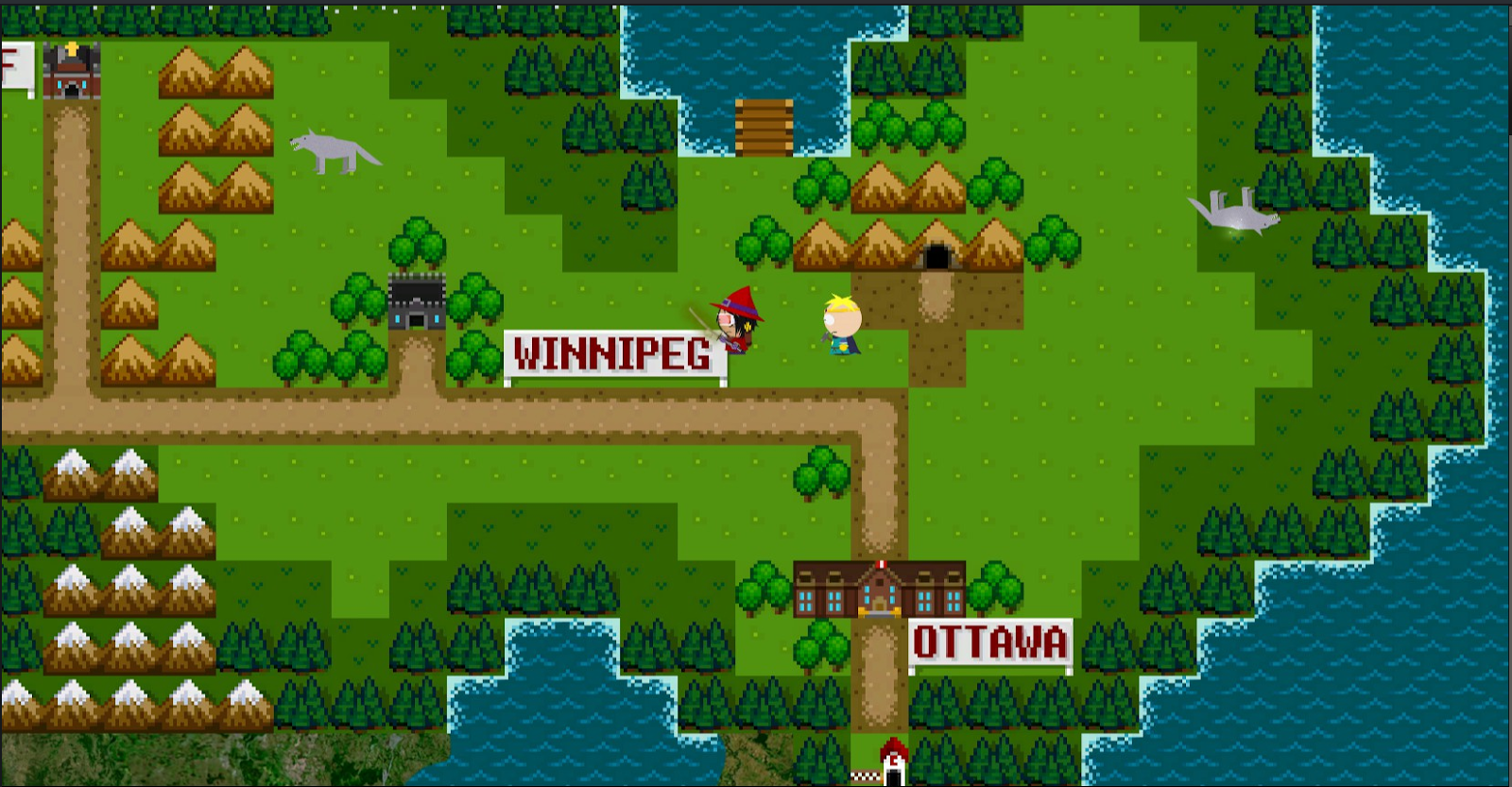
So to begin with - the South Park-elements of SP: SoT are really spot on. One could call it a long, interactive episode, but there is a major difference in that this game is mainly fan service and a lot less message than a regular episode would be. This game is designed to reward you for having watched through all those episodes of South Park, allowing you to meet and interact with pretty much all major characters of the series. I have seen far from every episode of the series and wouldn't say I was ever an active watcher, but the amount of characters I didn't recognize in this game were counted on one hand. The game also doesn't hold any punches, as to be expected by Stone and Parker. By the end of it you will have killed aborted nazi fetuses, crawled into a mans anus, get crushed by your dads nutsack and used your own anal probe to teleport around - just to mention some very few things. Just as in the tv-series, Stone and Parker cleverly never put anything in solely for the shock-factor, everything serves a purpose either story-wise or gameplay-wise.


Whereas in an episode the story is used as a device for Stone and Parker to deliver some sort of message, in this game it feels like the story is used as a tool to allow you as a player to try out as many different gameplay tropes as possible. At its base this is an RPG, but it will throw everything at you. You'll get skills that will allow you to teleport (as mentioned), shrink and blow things up for instance. A lot of the skills are used mainly to find collectibles or bags (the equivalent of chests in most other games), sometimes they're used to allow you to bypass fights. You'll get to do some Dance Dance Revolution. There is a SNES style portion of the game. There are quicktime events. There is stuff to collect. You'll be in space. You'll definitely not find the game outside of the battles too repetative or predictable (except you know you're playing a South Park game and if you know your South Park you'll know what to expect).

But let's talk a bit more in depth about the gameplay, because this is where the game disappoints. Not because the gameplay is boring, overall the South Park elements of the game will keep you going enough to ignore the short-comings, but because there are a lot of cool and interesting ideas in here that are criminally underused or squandered. Combat is turnbased and you (pretty much) always have a buddy with you. Each turn you can use an item or special command and an attack, magic or special attack. The same goes for your buddy. There are a lot of different debuffs like bleed and stun to use, attacks can either attack a single or multiple foes for either several light hitting or one hard hitting blow. Enemies (and yourself) can wear armor that lowers damage and shields that block damage entirely. You can patch your gear to give you different advantages in combat, either by giving yourself buffs or adding debuffing to your weapons. By timing your attacks and block with clicks you can add and remove damage, exactly like in the Paper Mario series. You get perks that give you different further advantages and/or buffs in combat.

So all in all the tactical possibilities to the fights are almost endless and promise to keep you interested and invested throughout. Too bad it doesn't deliver on the promise. It all comes down to one huge problem, and I really never thought I'd be one to complain about something like this - the game is just too damn easy.


A few hours into the game, after pretty much one-hit-killing every enemy, I decided to increase the difficulty from normal to hardcore. I barely noticed a difference. In fact, I only struggled with one fight in the entire game, and that was against Al Gore (and only because I botched blocking his snoozing "seminar on global warming"-attack). For the rest of the game you are simply too overpowered and would have to give yourself some sort of forced disadvantage in the likes of the Nuzlocke challenge for there to actually be any challenge. Most debuffs are silly strong, and before long you will get skills that are so overpowered it kills most things on your first attack. Not only that, but your party will replenish all their hp and pp (but not mana) after every fight. Why they chose to make it that way just baffles me, and I can only think of one plausible reason - it was more important to them to leave the South Park portion of the game enjoyable. Maybe they were worried people wouldn't be able to concentrate on the fun of running around with Cartman, Kyle, Stan and Kenny (and friends) if they had to struggle too much to stay alive. It's an unlikely explanation, but either way the end result is a game with a lot of potential in its gameplay and none of which matters much in the end.

There are also other design choices that makes you wonder whether the game was deliberately designed that way to piss you off, a la old school RPG design, or just some really weird oversight. An example is the fact that you can't see what gear you're wearing when shopping for new gear. In fact the entire shopping experience is a bit of a clusterf*ck. As you run around you amass a lot of junk, that fill no other purpose than to be sold for money and elicit some laughs. For some reason there is no "sell all" button, but you have to sell each individual item by double-clicking it (or highlighting it, then moving your mouse cursor to the "sell" or "sell stack" button). Imagine having 200 pieces of amassed junk in your inventory and yes - you then have to click that mouse button 400 times to sell all of that. Also, every time you buy an item the list of items resets back to starting position. Sometimes that means a lot of scrolling back down to where you were. Games haven't behaved this way in many, many years and it is only fortunate that the game is so easy that you don't really have to spend much time in the shops.


It's also funny, and this time I genuinely mean funny, that even though you can design your characters looks in the beginning of the game, you will quickly get so much look-altering items that it didn't matter what you looked like to start with. You can look pretty much any way you want before long. It also doesn't matter what you choose to name yourself, Cartman will of course make sure you're known as nothing else than "Douchebag" and "New Kid" throughout, a clever way to make the dialogue always fits as well as fitting the South Park Universe.

South Park: Stick of Truth is a fun South Park experience, even if it's not so fun as a gaming experience. The gameplay parts hold together much enough, alternate and introduce new things often enough to not make you bored and the South Park elements will definitely have you laughing just as much as any episode will. It's just that I am always a bit saddened when seeing so much potential just being so badly used, and I can only hope the sequel deals with it better. Because of this I couldn't recommend it if you don't have an affinity for South Park, if you do however, you are sure to be well entertained.