Showing posts with label Books. Show all posts

Saturday, December 30, 2023

2023 Review - Best Viewed and Read

 2023 is at an end and it is time to look back at the year that has been and summarize - what was good and what was bad? Any New Years resolutions to break?

I try to keep track of the games I play, but I am very bad at it. Because of this I unfortunately can't make a good list of my favorite games this year. I also don't really play enough of them to make a list of best ones, I guess. I recall replaying FFVII and that was just as great as I remembered, which I was relieved to experience as I had worried my rose-tinted goggles might've been at work. No, that game still holds up 100% and I had an absolute blast playing through it again. Other than that it has mostly been World of Warcraft: Wrath of the Lich King Classic and me trying to squeeze in other games, and some blogging, in-between. 

My personal year has been good, other than my washing machine breaking down and me having to wash our clothes at my work for the two weeks we waited for a new one to arrive. But it is here now and it is doing what it should, so that problem is solved.

Best Books of 2023

These are by no means new books or released anywhere near 2023, but simply books I've read during the year. I read about 50 books, if you count the Judge Dredd Collection of series, which I do. Here were some of my favorites;

1. Judge Dredd - The Complete Case Files

A collection of every Judge Dredd series released in the 2000AD magazine and they are all amazing. I love reading them and I am happy there are many more for me to get. I am at the 7th book when writing this and I think they've released 42 or so. I tried thinking of some favorites, but I actually really enjoy them all - big stories and small ones alike. I'd love to explain the concept, but it needs to be experienced to be fully understood. In essence, Judge Dredd is a supercop in the future, handling all kinds of extremely crazy future problems. The tone is satirical, dark and far-out imaginative. I'm endlessly impressed by the writers abilities to come up with more and more crazy stories.

2. The City of the Chasch by Jack Vance


Not an amazing book by any means, and maybe I just liked it because I was so positively surprised that it wasn't as bad as I expected. Some time ago I acquired a haul of old sci-fi "classics" released in Sweden, in bad Swedish translations, under the Delta Science Fiction name. Most of these books have been a chore to get through. Out of the 30 or so I've read so far, maybe two or three have been worth reading. The City of the Chasch was one of them. The main character Adam Reith is sent out from Earth to investigate a distress signal on a planet called Tschai. After a crash landing he find that the planet is inhabited by loads of sentient species, many of which keep what seems to be humans as slaves. The humans themselves don't remember being from anywhere else, neither seems anyone else. Are these humans actually from Earth? The book has good world building and an interesting mystery at its core, it kept me entertained throughout but is part of a series so I haven't read the conclusion yet.

3. The Three Musketeers by Alexandre Dumas

The Count of Monte Cristo is my favorite book ever. Of course I had to see if Alexandre Dumas could pull it off again. And he does. The Three Musketeers is also an amazing, fun and exhilarating read and none of the movies I have seen do it any justice (which is also true for The Count of Monte Cristo). The story of how the young adventurer d'Artagnan befriends the musketeers Athos, Porthos and Aramis (not their real names by the way) has everything you want in a good book.

4. Anything from Bitmap Books

This year I read Game Boy: The Art Collection and The Secret History of Mac Gaming. I already own two or three other books from these publishers. If you're into video games, nostalgia, well written facts and pretty pictures, these books provide and then some. The quality and design is superb and the books themselves are almost works of art. It helps that the content is great too. Definitely check them out, they're worth every penny.

Best Watched in 2023

I don't watch many tv-series, but I've seen a fair few movies. Here were some standouts;

1. TMNT: Mutant Mayhem

I enjoyed Rise of the Teenage Mutant Ninja Turtles: The Movie, without having watched any of the TV-series. So I decided to give Mutant Mayhem a chance too. I loved the quirky animation style, I loved the characters. The humour was spot on TMNT. Very entertaining and worth checking out if you're into TMNT.

2. Violent Night


A friend of mine recommended Violent Night, probably knowing what kind of action I am into. And this movie delivers. It's such a whacky concept that it takes all the way, and it even works better than Tommy Wirkola's previous movie Dead Snow, which was also fun. I love John Leguizamo in anything, yes even Mario Bros and Spawn, and he is great here (so is Beverly D'Angelo is a badass matron). But of course the real hero is David Harbour as Santa, and the writing.

3. Indiana Jones and the Dial of Destiny.

I don't care what anyone says, I think this movie was absolutely great. I watched it with my kid in the cinema and had good old matinee fun! Because this was the first Indy movie he saw, we of course had to go back and watch all the other ones too. It was fun to see him recognize characters from the earlier movies and Dial of Destiny is a worthy successor. I like it better than Temple of Doom and Kingdom of the Crystal Skull.

4. Lightyear

I hadn't watched this yet and because I have been disappointed with most Disney outings since Toy Story 4 my expectations were low for this movie. It wasn't improved by the fact that reception was bad as well. I was very pleasantly surprised then to find a really neat sci-fi movie in Lightyear, and probably one of Disney's best movies in years (I also quite liked Onward). It gave me some hope for Disney, but watching "Wish" later this year squashed a lot of that...


What were your standout experiences in entertainment this year? I am always up for good tips in the reading, watching and gaming department.

Wednesday, August 16, 2023

Choose Your Own Adventure

 Do you remember the Choose Your Own Adventure books? Sure you do. Bet you haven't actually played one in years though. Neither had I until I stumbled across one because I was looking for something else.

I am a big fan of the Judge Dredd series and I am currently collecting the ever-long Complete Case Files series (I've only made it to book 6 out of 42 and I think they are still being released). If you've never heard of Judge Dredd... well that is just impossible. Sylvester Stallone did that very 90's action movie as the titular hero (completely butchering it yet still an entertaining watch) and you've definitely seen that (you should also watch the other Judge Dredd movie with Karl Urban which is also great). Other than that you don't really need to know more than he's a British comic book character from the 70's, with the comic still running. And I love it. In post-apocalyptic Mega City 1 literally anything can happen and the stories are wonderfully entertaining social commentaries while also exploring the human nature. Judge Dredd himself is also simply the coolest protagonist of any comic, I'll fight you for it.


So while looking for more Judge Dredd comics to throw my money at I found out that they had released the Complete Dice Man which is a collection of Choose Your Own Adventure series originally published in the 80's. The cover has Judge Dredd on it. I had to get that, of course. Judge Dredd only makes up one out of 15 of the stories in the book however, but it's a great one.


In it Judge Dredd has to go into a creepy mansion to face one of his most formidable foes, the Dark Judges lead by Judge Death, who is just as peachy as the name suggests. If you've seen the Hellraiser movies, you can think of them as a type of Cenobites but inspired by the Four Horsemen. Judge Death is accompanied by Judge Mortis, Judge Fear and Judge Fire to make life shitty for everyone around them. Judge Fear is pretty useless against Judge Dredd though because he can't feel fear. Grab you pen, paper and dice and jump in!


As you know with Choose Your Own Adventure, you get a selection of actions to take throughout the story where most of them end up in brutal death (or is that just the stories I read?). Video Games like King's Quest must've been heavily inspired by these kind of books. It takes a bit of discipline not to read ahead in these books, especially the comic book ones where the imagery is right there in front of your eyes. A well designed book won't have the pathways you can take right next to each other, but require you to jump around from page to page, that way you decrease your chances of accidentally looking ahead.


It took me four tries to get through the Judge Dredd Adventure, that bastard Judge Death crushed my heart three times (he loves doing that) before I could find my way through the mansion that allowed me to trick him back to his own dimension (yeah, he never dies). But it was such a blast and now I have a craze for these CYOA books that I felt I needed to share with you guys. So dig in your cellars, check your flea markets or even better, go order some from your local book store. You will have some great non-screen-time fun.

Sunday, June 26, 2022

The Technicolor Time Machine by Harry Harrison - Book Review

Do you like stories about time travel? Who doesn't, am I right? Without sounding superfluous, I would like to say it's one of those genres of literature that must be simultaneously the easiest and the toughest to write about. On the one hand time travel could be anything you want it to be, since we have no reality to compare it to. On the other hand it's so easy to write yourself into mind-bending paradoxes that make the reader just think you're being silly now. If you're trying to do it seriously it must be an impossibility to keep every timeline clean from scrutiny. I am sure even the most serious creator gives up at some point and realizes that some things are just not going to be explainable.

If you want to read something very educating and interesting about "real" time travel, as we understand it today, I can really recommend Kip Thorne's "Black Holes and Time Warps". Kip Thorne was also scientific consultant on the movie Interstellar, which shows how some of the theoretical ideas from the book could work.

A cover that captures the essence.

I really think I don't come across time travel often enough in literature, please point me to some good works if you know of any. Maybe that is why I enjoy sci-fi on TV where this seems to be explored at a regular basis, my go-to Star Trek has delivered on so many I'd be hard pressed to even say my favorites (but it is probably telling that both The Voyage Home and First Contact rank among my favorite Star Trek movies).

H.G Well The Time Machine is interesting from a history of literature (or history of sci-fi) point of view, but it's not very entertaining to read. Because good time travel stories seem few and far between in literature, I was very happy to come across Harry Harrison's "The Technicolor Time Machine" from 1967. It's one of those deliciously funny stories that takes the time travel story and runs with it to its furthest reaches.

- Ottar has signed the contract. I was very surprised to find an Icelandish notarius publicus here...
- You can find anything in Hollywood.

The concept of the book is as funny as it is silly. Time is money. So if you're a movie company and have no money but a time machine, couldn't you save a lot of money by simply time traveling? Let's just say, it's not going to be that easy. 

The main character, director Barney Hendrickson, works for a movie company that is just about to go bust. It has about as much money needed to make one last movie, but no time to make it before the banks come and take it all away. Because of reasons, Barney happens to know a professor who has invented a working time machine. Barney decides to use it to jump back to the time of the Vikings (around year 1000) to shoot a movie about the Vikings "discovering" the Americas, which they called Vinland. The idea is based on the very real theory that Vikings briefly settled on the Canadian coast, way before Columbus ever set foot there.

- There is a hostile guard. You need to sneak up there and kill him just like if this was for real.
- But why?
- Why? What kind of question is that, Ottar...?

The time traveling works fine, but it turns out that the practicalities of shooting a movie aren't removed because you suddenly have all the time in the world. Barney has to make the most out of the fact that the time machine can allow you to spend any amount of time in history and still only use one second of time in the "now". In the "present" Barney only has a weekend to finish the whole movie so he constantly needs to make sure no one spends any time there. He sends off the script writer to Trilobite-time to finish the script. He has to send off the lead actor to a different time because of an injury. They forget one of the actors in-between jumps (one second in present time, a year in Viking-time) which has life-altering implications for her. They leave the old-norse language historian in Viking time for months so that he can teach the lead Viking actor to speak English. 

That's not even to mention the ordeals of getting the native time-inhabitants to cooperate with a project they don't understand on any level. Nor the fact that they have to deal with hostile forces that literally want to kill them. Barney takes it all in stride and makes the most out of it. When he fails to get the native Indians to "act" in the movie he decides to use the very real attack on the settlement in the movie instead.

- I didn't want to bother you while you were eating, she said.
- Why not? After what I just ate my digestion will never be the same. Do you know what a Trilobite is?

The end result is nothing but a romp, in the best of ways. It gets to the right kind of confusing and hilarious, like a slice of something out of Hitchhiker's Guide to the Galaxy. It always feels like a miracle that Barney can keep track of where everyone is on the timeline and most importantly how much pay they are due (an ever constant argument with the company owner, who keeps arguing that only mere hours have passed in the present and everyone should get paid accordingly). 

The Swedish version called "Barney the Time Traveler Saga". I don't think the cover artist has read the book.

Because it is a book about time travel it wouldn't be a proper ending without a twist, one that I foresaw pretty early on but which was nonetheless clever and thought-provoking.

The Technicolor Time Machine is the kind of book that is created when someone has an interesting idea over a cup of coffee somewhere and they go "what would happen if...". Harrison brings it all together marvelously. It has some flaws, there are some not so well aged, "to be expected of the time"- caricatures (anyone who isn't a white male is horribly stereotype, I tried to read it as a parody), and my Swedish copy (from 1982) is a pretty bad translation. But it doesn't remove from the fact that the overall concept and execution works to entertain. 

This was my first book by Harry Harrison and I am eager to find more. I am actually surprised this hasn't been turned into an actual movie, because the book reads like one, and I think it would be brilliant in the right hands.


Monday, January 20, 2020

My Best of 2019

Time to take a look back at 2019 and some of my personal entertainment highlights as far as books and games go.

Some thoughts on the books I read in 2019;

Overall I can't say 2019 was a good year for my reading. I did a lot less of it first of all. I think the main explanation is that I used to do most of my reading at my work (it used to be very intermittent work load with sometimes longer breaks in-between) and now I have a different job that has pretty much no breaks for reading instead. The upside is that I have more fun at work, the downside is that I have less time to read.

I also didn't read many books that wow:ed me and some times when I read a lot of not-so-exciting books in a row it sort of puts me off reading for a while. I have this issue with watching anime or TV-series as well. For instance my usual go to series when I want something that I know I'll enjoy - The Expanse - ended up being not as good as I usually think they are. The fifth book in the series, Nemesis Games, introduced a character I had little interest in and really just wanted to go away.
Unfortunately that seems very unlikely to happen anytime soon, but maybe I can suffer this character if the rest of the storytelling is as good as it usually is. Nemesis Games didn't deliver but Babylon's Ashes which I am reading at the moment is already proving to getting back to older forms.
As an anecdote I can mention that I've watched all the seasons of The Expanse on Amazon as well (and Netflix before the move) and while I think the books are amazing I actually think the TV-series is even better.

Didn't have much of this last year.

I've also read a couple of Agatha Christie books as it's always been on my bucket list to read through at least a few of her works. I find them very snack-sized. They're easy get through and entertaining enough but not really anything you'll remember for too long afterwards.

Interestingly enough my favorite books of last year where actually two books I had already read before and re-read because I enjoyed them so much. I guess they don't really count then since I knew I liked them already.

The first one is The Mountain Village by Chun Chan Yeh. I have a fascination with the ordeals of Chinese people through the ages and maybe especially the early 1900. This book takes place in a little village out on the countryside and what happens to the people there as cultural and political revolution takes place around them. People are only trying to get by and do the right thing, but when the right thing is defined by whomever has the most soldiers that day it turns out to be a very hard thing to do. It's well written and heart breaking in many ways. I love it because it manages to make you smile through all the hardships, it's not all grim. You really care and feel for these characters who could've been any one of us.


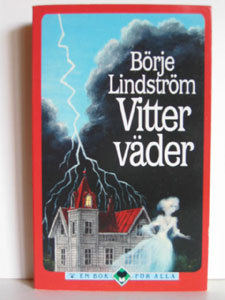
The second re-read I did last year was of a book I read and owned when I was little. It's called Vitterväder (Wights Weather) by Börje Lindström. It's a ghost story for young adults and I remember really liking it for its down to earth writing style. I decided to buy myself a copy as I've lost my old one somewhere and see if it still held up, and it definitely does. It has the right amount of creepy yet doesn't over-embellish but keeps it clean. I always enjoy books that can tell things with less words rather than more.

Another book I am glad I read last year was Frågor Jag Fått Om Förintelsen (Questions I've Been Asked About The Holocaust) by Hédi Fried. Hédi Fried is a Holocaust survivor born 1924 in Romania and she has worked many years with different kind of educational work regarding the Holocaust. Frågor Jag Fått Om Förintelsen is a straight-forward Q&A with things people have been wanting answers to regarding the Holocaust when she has been out giving speeches. The subject matter makes it a dark read, but it's a necessary one. These things will always be difficult to process and understand, if not impossible, but this book breaks it down to just the thoughts that pop in to people's heads and it's a great read.

My gaming year of 2019 was pretty good actually...

It started off absolutely brilliantly with Return of The Obra Dinn. What a great game. The only bad thing about is that it's a one-off, you can't experience the magic on a second playthrough anywhere near as it is the first time you play it - but that only goes to emphasize what a special game this is. Original idea executed amazingly, this is fun and enthralling from beginning to the end.

Cause of death - really bad luck.

I also played Bloodstained and enjoyed it a lot. Bloodstained is a good example of how you can't capture lightning in a bottle twice, but by golly if you can't have fun with it a second time around. Borrowing very heavily from the Castlevania Symphony of the Night formula, Bloodstained decided to add more of everything and I think it worked. A lot of the extra stuff wasn't really necessary but it also didn't detract from the core game so I didn't mind it. The main game was competent enough and kept my interest throughout.

Talking about re-treading old footsteps as I seem to have done in my book reading last year, I also replayed Resident Evil 2 in a way. Resident Evil 2 remake was finally released, more than 15 years after it was first announced (yes, it was first announced when the first Resident Evil remake was released). The first Resident Evil remake still stands as the template on how to not just make a game justice but actually improve upon it with modern tools and I was definitely worried that Capcom could not pull that off twice. I am so glad I was wrong. The Resident Evil 2 remake embraces everything that made the original great and adds new flavor to the formula to keep the familiar feeling yet making it fresh. Kudos to Capcom for pulling it off again. Let's hope they can do a hattrick with Resident Evil 3 Nemesis.

2019 was also the year that saw the return of WoW Classic and I can't tell you how much fun I've been having with it. I still play it though literally no one else I know does (or at least not on my server). Even my bf who played it a bit the first couple of months, and we were levelling paladins together, cancelled his subscription last month. Me, I am trudging along in my loneliness. It's not that bad actually, and to be fair it's pretty accurate to my original WoW Vanilla experience. Back then I only knew my brother who played and for the first nine months we shared an account, so playing together wasn't an option. Also he was all into Pvp and I really wasn't.

I've missed this place.

At the moment I play my different alts (have pretty much one of each class) and haven't even made it to 40 on any one of them yet. I run around and do quests and the occasional dungeon while listening to podcasts. I love that you're often forced to ask other people for help and most of the time I only meet nice and funny ones. I am taking my time to get to endgame because I know that's probably when I hit my stop button. I never really raided in Vanilla and I don't have much desire to do so this time around either. On the other hand I know endgame content is more accessible this time around, for whatever reason, so I wouldn't mind giving it a shot. We'll see when I get there, because at this rate of levelling it is going to take me another half year at least, and I am perfectly fine with that.

If I were to also look ahead a bit...

I am mostly stoked for Cyberpunk 2077. I wasn't too fussed about it really until I started playing the Witcher 3. The only reason The Witcher 3 is not on my "awesome games I've played this year" list in this post is because I am nowhere near done with it yet. Spoiler alert, it will be on my list for 2020, if I remember to make one. While I really enjoyed The Witcher 1 and 2 and so I knew CD Projekt Red clearly could do great games, I put it down to the IP rather than the craftmanship. But now that I have played X many hours in The Witcher 3 I have a completely different idea of the skill set of these developers. Cyperpunk isn't something I am crazy into but definitely a genre I enjoy, so now I am really looking forward to trying this game out. As I am writing this, CD Projekt Red just announced that the game has been delayed until September and to me that's is practically good news since I still need more time to finish off The Witcher 3 before I can delve into Cyberpunk 2077.

Can't I just play as Geralt in the future?

Years and years ago, it feels like now at least, I heard about Final Fantasy VII remake being a thing. I decided to buy a ps4 pretty much on the basis of being able to play that game. Years later we are all still waiting as you know and I was starting to become pretty sure that the game wasn't even going to make it onto this generation of consoles but that I would have to invest in a ps5 as well. Well... it is coming out this year now finally right? Did I get that right? I don't even know anymore and I don't even know if I care. Maybe one day it'll come out and when it does I will be a happy camper and play it.

On a personal scale life is absolutely great and on a global scale I am panicking, but at least there are some good gaming and reading hours ahead of me...

Any of you have some personal favorites of last year? Book recommendations are definitely always welcome!

Images from Youtube.com, goodreads.com, pcgamer.com, myogaming.se

Tuesday, December 31, 2019

Game Up Your Life

Many years ago I read a book by Jane McGonigal called Reality is Broken. While I remember not agreeing with many of her points (you can read my review of it here) I did find her main idea intriguing - the idea that everything not only can, but maybe should be turned into a game, to motivate people to do things they wouldn't normally do. Things that would not only benefit themselves by having fun (ideally) but also have an added benefit of helping someone or something else.

This is in fact something that has been explored further and even put to use in many different ways since. One that comes to mind is allowing the public to sort through vast amounts of pottery shards to find the ones that could hold interesting information in some ways. Rather than having some poor archaeology students spend countless of man hours on what would ordinarily be considered a tedious and menial task, you can turn the "pottery shard sorting" into a sort of mini-game and by making enough people interested you can not only get the job done quickly, but by people who are having a good time doing it.

The book in cuneiform.

That is the idea in a nutshell, and I love it. Like I said it has been used many times before and I think it holds great potential. I have also explored the idea before myself in a couple of blog posts. I guess you can see this blog post as a pre-cursor to this one. So yet again this idea had me thinking and it made me wonder if not maybe we could put it to use at a much smaller level. I mean much, much smaller.

How about using it as a way to motivate and even enthuse a child to the prospect of having to do something they would ordinarily not want to do? As the proud mother of a 6 year old I am always eager to find ideas that allow me to keep my child happy and me less nagging and annoyed. Some times when you just want and really need your child to co-operate you usually have two paths to take - the one of threats and the one of bribes. I am not a huge fan of either of these. What if there was a third path? One that made the child interested in the project at hand without you having to resort to future wrath or promise of goodies?

Well, in a way I guess this idea is a bit of both really - but packed and presented in a way that makes it clear that we're not talking about any real threats or bribes, but game-ones.

I'll give some examples from my own experiences:
Going from point A to point B (that'll take more than 5 minutes). I'm not even kidding, most of the time even though my kid can run around and scream endlessly if he wants to, when he doesn't want to he is suddenly struck with debilitating laziness and can barely walk. It can be beyond frustrating, especially if you have a time to keep (which is often the case). I've had my kid tell me he couldn't walk because his leg hurt so much, but if he got to take the longer way around it was fine. This kind of illogical reasoning is something that crops up all the time with kids, but it all boils down to one thing - this is boring and I don't want to do it.

Most of the time if I can allow my kid to get it his way (and it also suits my way enough) I will. But some times that is just not the case. Maybe you need to get to the train station and you just missed the bus? Your kid doesn't enjoy the prospect of having to walk (maybe exasperated by the fact they had been looking forward to a bus ride) and the idea of carrying him and the luggage the entire way is just not feasible. What to do?

The book in regular letters.

What about turning the walk to the train station in to a video game? If you've got time to prepare it's of course the best, but even a quick plan could work wonders. Quickly map out the path you're going to take in your head. Where could there be a "boss" for you to fight? Where is there a "pit" to jump or a "treasure" to find? Add "npcs" and "objects of interest" as it fits the path and a dash of invested story telling and you'll suddenly, possibly, have a really interested 6 year old.

I use the word "video game" but really it's just a game or any old adventure. To me personally it helps to think of it as a video game because video games are usually well structured in the way of "levels", "items" and "bosses". If Dungeons & Dragons is your type of reference that's just great.

Me and the 6 yo actually had to take a rather long walk the other day and while we could've taken the tram I decided I wanted and needed the fresh air. As we started walking it took about 3 minutes before my kid said he didn't want to walk any further. I told him he better get prepared because over at X place there was a boss waiting for him and he still had to find the SWORD to beat it with. He got a big smile on his face - "where is it?". I pointed to a row of stones - "it's behind one of those but beware, because the wrong ones have monsters behind them instead". He ran ahead to the stones and started to look. "Tough luck, there is a monster!" I said and he had a pretend battle with it. After a couple of other monsters he managed to find his "sword" which he proudly carried (invisible in his hand) all the way to the boss.

On this trip we also had to find a shield, kill that first boss, then find a scroll of turn-to-stone to get past the cave troll, then speak to the fairy to recharge the scroll, then find our wings to fly up a mountain... The entire time there wasn't a word about not having energy to walk, just eagerness to continue forward to the next thing.

Not the cave troll in the article.

Another example - cleaning/tidying. If you could grade kids on a scale of how easy it is to get them to at least do some tidying I think my 6 yo ends up somewhere around 2, 1 being impossible. It doesn't matter that he literally just threw every book in his bookshelf on the floor in the search for something, when I ask him to pick it up (even offering to help) the answer is always "I don't have the energy to do that!". Well duh. Like anyone does.

Suffice to say, many tactics have been used to try to motivate my kid to pick things up after him, or at least help out in doing so. Whenever he does show interest in helping out with cleaning it's often things where I don't really trust that things won't break like him doing the dishes or him swinging around a mop. I still try to encourage him when he does show interest, because at least it is something.

But what if cleaning could be turned into a game? I tried it. We drew up an avatar, I told him it could be anything (he chose a jellyfish) and I said there were different things he could purchase for this avatar i.e draw on to the picture. Things like spikes, sun glasses, a fish pal or a big shark. But these things cost points that he had to earn by doing different chores.

He was excited. "What can I do to earn points mom?". "Well you can start by picking up all these Legos, that's 10 points.". "How much is the fish friend?". "That's 50 points. The sunglasses are 10 points". "Ok, cool". He started picking up the Lego. I can't emphasize enough how much more nagging and time this would've have taken normally. Threats, which I am generally not a fan of anyway (but every parent resort to them eventually) just do not work on this kid, so that's never been a real option. Just asking him to do it out of the kindness of his heart and because it would make mom really happy... well let's just say he hasn't really grasped the benefits of that yet (I'll get back to this momentarily).

*sigh*

But with this system he not only tidied without any problems, he asked for more things to help out with. I soon struggled to keep him occupied - my fault really as I should've been ready with enough chores for him to do to be able to get every special item for his jelly fish. Funnily enough, even when he had enough points to buy things he decided he wanted to save them. Maybe for the next time we tidy.

So far so well, I can see this system with a bit of tinkering easily being adapted to a whole plethora of situations. I do have thoughts though and I don't think it's just a wonder wand of solving every issue regarding motivating my 6 yo.

For instance, as mentioned, shouldn't kids learn that tidying is its own reward? That listening to someone else and doing what they want can be a nice thing to do even if there isn't an immediate reward involved? Are immediate rewards really the right way to go about everything? Some things in life simply don't pay off until later on, and isn't that a really important lesson to learn as well?

Yes, I totally agree with all these points and they require some careful consideration. I often tell my kid that everything can't be fun right now. Some times, some things you do are not so fun right now so that you can have more fun later. Having a nice and tidy home or making your friends and family happy can be its own reward and a good one at that.


But I also subscribe to the Friends school of altruism, i.e that there isn't any. Everything we do, we do in some way or other for our own sake. If I give money to charity it is to make myself feel better about making other people feel better. If I clean my home it because I feel good about having a clean home. I don't think this is a bad thing. A deed can be "good" regardless of the underlying reasons behind it. I don't think a recipient of a needed organ for instance really cares of the reasons behind the donors wish to donate.

So where am I getting with this? That yeah, it's important to teach a kid about different ways things can be rewarding but I also think that it's important to find ways that something can be rewarding for that person (in this case my kid). When you're 6, it's good to hear someone ask you to be nice for its own sake but it's also good to just get to have fun doing something.

And maybe we do things for future reward because we haven't learned how to make it fun right now? I would feel good from doing excercise for instance, but that doesn't mean that the excercise in itself can't be fun too? I like when things are clean but that doesn't mean there is anything wrong in making the cleaning part fun as well?

The main drawback to this system would be that it requires either some planning or good on the spot thinking/improvisation. Also, as with anything else, different people enjoy different things. If your kid happens to be the kind that just listens and does their tidying then congratulations! What your kid needs really depends on what kind of person they are and there isn't just one way to do things. This isn't the way, this could be another way when you're sick of nagging or just having to do it yourself. I think it could also teach the lesson that things that might look tedious on the surface can be made fun if you try to.

I think the reason this appeals so much to me is because I am not easily motivated to do things I don't enjoy. The whole "just do it" or "discipline!" way of doing things has never worked for me. Fortunately it is offset by my optimistic personality and the fact that I see the possibility of fun in most things. But there are some things I just don't like doing. Exercising… cleaning… getting out of bed before 12 (before I had kids, now they're my motivation and I haven't slept past 9 for the last 6 years). I am not a goal hunter, I need to find the journey to my goal entertaining as well or I will struggle to get it done. I guess in that way I am still like a child, for better or worse.

As you've noticed it's an idea that really jives with me. We like to set up goals and motivate ourselves to get there, but maybe we should spend equal time trying to make the journey there fun?

Also, credit to a book that still has me thinking about it 9 years down the road.

Images from wired.com, skullstore.ca, fantasyflightgames.com, me.me.

Saturday, September 1, 2018

What Remains of Edith Finch (PC) - Review

What is wrong with these people?
(Spoilers!)


I am so happy about the indie-revolution. Because of it, we're seeing a plethora of game-genres emerge (or re-emerge) that I didn't think were possible some 15 years ago. Back then I thought we'd pretty much be stuck with an endless line of Battlefields, FIFA's and Final Fantasies. Now we've got games that are more like toys, like Chuchél, games that are more of everything like Undertale and then we have games that are more like books, like Gone Home and To the Moon. What Remains of Edith Finch falls into the latter category, although for some reason they've been a bit playfully, or spitefully, called "walking-simulators". It's understandable, if you were to traverse a book you'd mostly just do walking and reading, and so it is in these games. Some argue that they can't be called games at all, and I find that discussion a bit beside the point. They're interactive, but they don't have much of gameplay in the sense of being able to fail at things or achieve stuff. It's an experience, and it's inbetween reading and gaming. The fact is I don't know why these games don't fall under the "visual novel" category, because it would be pretty lame if it was solely because you can walk around in them.

I do feel that these games, as I am going to call them nonetheless, fill a niche that a regular book couldn't though. Even with Walking-Simulators I didn't find very enjoyable, like To the Moon, I find it hard to imagine that the story would've been any good if it had been text only and no "gameplay" at all, even if the gameplay is what I found particularly weak. The interactivity of the medium gives life to a story that could've otherwise potentially not been as strong or entertaining. It's only fair that if we have a ton of games where the story only works as the backdrop or excuse for the gameplay the other end of the spectrum would be where the gameplay is only the backdrop or excuse to experience the story.

I know I've said there will be spoilers, and never is that more serious than with these games. They pretty much are their stories, so if you want to play it I strongly suggest doing so before reading this review.


What Remains... is a story about Edith returning to her childhood home to explore her family history. Four generations of Finches have lived and died in the house, and we pretty immediately find out that most of them died very young. This is due to a combination of Kennedy-esque bad luck and what can only be described as criminally neglectful parenting by the Finches. As you uncover more and more of the stories behind these peoples deaths, because that is the narrative of the game, you'll baffle at how no one seemed to learn from past mistakes. So we learn that Molly dies from eating poisonous mistletoe berries, that were kept in her room. Gregory drowns in the bath after his mom leaves him unattended to answer a phone call. Gus is left out in a storm and Calvin falls into the ocean because someone thought it would be a good idea to build a swing set right next to a cliff. Each story, and subsequent death, is experienced through a little mini-game which is different for each character and quite imaginative. It's difficult for me to wrap my head around whether the designers intended for these mini-games and stories to leave me sympathetic or chuckling. There is nothing funny about a toddler drowning in the bath of course, and the mini-game handles the matter quite delicately, but as a parent myself I found it a lot more frustrating than endearing to get to know the Finches. A lot of the time the stories left me thinking "really?", and not necessarily in the "wow, this is so tragic" kind of way.

As Edith you walk around the house and slowly discover each story. I say slowly because sweet macaroni does Edith walk slow. Fortunately it's not something that becomes very annoying, simply because the game rarely requires you to move, or want to move, quickly anyway. But walking up and down stairs is unrealistically slow and I was glad it wasn't something that I had to do often. Speaking of unrealistic, for some reason the designers have some very un-human looking models in the game at places and they really broke my immersion. Overall however the game did an ok job with making me feel like I was visiting a real place, albeit one inhabited by what must've been semi-crazy people. Because of this the game is also perfectly linear, but if you expected something else from this genre then you should've probably gone for one of those "Pick your story"-books instead.


Here are some of the notes I wrote down while playing it;
- Right at the start of the game Edith comments that they all grew tired of eating salmon after her brother started working in the cannery. Let me just say it's impossible to grow tired of salmon, I could eat that all day, every day.
-  If I've done my math correctly, Dawns dad is supposed to be 33 when he dies. He definitely looks like he is around 50 when we play his segment though, so I guess life wasn't kind to him.
- The first Finch (of the game family tree) is Odin, who is from Norway. Bit cliché to name a Scandinavian after Norse Mythology though, innit? Don't think Odin is a very common name in Norway.
- The end credits are really cool! Each name in the development team is accompanied by a picture of them as a kid. I wonder which picture of me I would choose for something like that?

The game is eerily similar to Gone Home, so much so that I had to check which came first to see which game copied the other (Gone Home was released 4 years before What Remains...). What Remains... is a much more fantasical game where Gone Home is a lot more grounded, and I definitely enjoyed the latter more. They're both only about two hours of gameplay however, and What Remains is still worth experiencing if you enjoy these types of games - if nothing else for the pretty far out death stories and they're accompanying mini-games. I will definitely give credit for those mini-games being quite memorable, especially the first one where you as Molly go on a hallucinogenic trip where you end up eating yourself and the last one where you as Lewis end up cutting your head off. Don't say I didn't warn you.

It makes you wonder though, who comes up with the idea of a game that is basically a whole bunch of kids dying in different ways?

Friday, May 26, 2017

The Witcher - Thoughts and Review


I don't know what I expected of The Witcher when I first started playing it. All I had really heard about it were good things and I had seen a tiny bit of gameplay. The bf had played a bit of the intro but fresh off from playing Dark Souls he pretty much disliked anything that wasn't like that, so I knew his opinion was probably not much to go by. Having just played Dragon Age: Origins myself, which I had also hear very good things about but never really got into, and Mass Effect, another game with good reviews that I thought was ok but nothing special (though fun enough to at least play through unlike DA:O) I guess my hopes for TW were both high and low. Low because I had been disappointed by the previous so-called great games I had tried that didn't particularly tickle my fancy, but also high in that I was hoping that TW could finally prove that hadn't just become too jaded to enjoy great storytelling games anymore.

The "problem" with storytelling games is that you need to give them the time and opportunity to let their story have an impact on you. If my incentive to play diminishes from supbar gameplay, then it doesn't really matter how great the story is, I won't feel engaged anyway. Although to be fair, with DA:O I had the opposite issue where a boring story removed from the somewhat fun gameplay.


TW caught me at once however with an interesting main character and a clear goal. There is danger in having a named character with a personality from the get-go, if the player doesn't sympathize with the character the whole game will feel uncomfortable to play (I more often have this issue with movies and series than games, but it's the same basis). TW however managed to strike a fine balance between the character Geralt and the player. Throughout the game Geralt will be himself, but the game also allows the player to express their opinions through the different story options that are given. Will you save the werewolf or kill it? Will you side with the Order or the Non-humans? The game did a great job in convincing me that Geralt could stand behind either of these options without ever making him seem insincere or out-of-character. That is not an easy balance to strike and I applaud the creators for making it work so well. The options you are given are rarely morally clear-cut but often feel like they're both equally right or wrong. As such it is up to you as a player to make the final decision and it was satisfying to see Geralt stand behind either option no matter what you chose. Geralt would always give a sensible explanation to why you would act the way you did. It also provided me with a lot of thoughts when I realized things I had chosen and stood behind at first, spiraled out of my control and suddenly I was in a situation I didn't want to be in anymore. But at that point I had made my bed.

I also realized that Demonicon, another game I had played before this and also Let's Played, had borrowed heavily from especially this aspect from TW. Demonicon, which is a simplistic game with a lot of flaws, but still entertaining, also presents the player with difficult choices and that was one of the elements I enjoyed the most from that game
.

Probably the most annoying character in the game


The story was maybe not the most thrilling I have ever played through, but in a way that felt good. I wasn't cast as the savior of the lands (not yet at least, I can guess that might come in later games), but as a character part of a big whole going about my business. In that way it was similar to games like Fallout (the first one) where you set out to solve the problem of your own little world, while at the same time inhabiting a world full of other peoples problems. TW doesn't start you out in the shoes of someone entangled in political deceit and worldly problems, but cleverly steers you that way by setting Geralt on his own personal quest. I must say I really prefer that kind of storytelling.

There were things in the game that irked me, though very few. The "conquest" style of bedding women felt a bit off to me, and even a bit off to the character of Geralt. Eventhough people kept telling me what womanizers the Witchers were, I never got that feeling from Geralt. More often it was the women that threw themselves at him and he just obliged. The fact that you can basically get into a steady relationship with Shani about halfway through the game made conquests after that point feel even more odd and I always avoided them when I could. And generally you can, which I was very greatful for. There were also some lose ends in the story, like Triss real motivations and whatever is wrong with Alvin - but I suspect and hope those storylines will be continued in the other games. I have no idea how faithful the game is to the books, although I intend to read them, but to me it felt like the whole womanizing thing was something that was shoehorned in to fit the source material.
This thingy was a bit of a pain


The gameplay also struck a good balance between being the right amount of complex, with a nice mix of magical and physical combat. At least it felt like it had a lot of potential, that didn't really come to full fruition in this game. For instance I found it a bit unfortunate that most magics didn't feel useful at all (I basically stuck with fire and stun magic throughout, only occasionally trying the other ones out) but maybe that was because of the difficulty setting. I played on normal which I felt was fairly easy most of the time - the only time I died repetetively was on the spider boss that put bleed on me. For some reason it took me a couple of deaths before I figured out that was what it was, so all the antivenom I had taken was for naught. Maybe on higher difficulties a great variety is needed in both alchemy usage and magic usage. I liked the system of strong-fast-group style and  it worked well enough to rarely become irritating. There were some enemies you grew fairly sick of fighting, especially the Drowners and Drowned Dead and before long I decided to just run away from them. The areas varied from fairly infuriating (the Swamp) to quite enjoyable (Vizima). I don't know how but I constantly got lost in the Swamp and I was thoroughly glad when I realized I didn't need to go back there anymore (you spend a considerable amount of time there however).


The game is divided into different chapters and I felt the game only got better as it moved along. Of course this can just easily have been because the characters and settings are becoming more familiar to you and you are more invested in the story as you get further into the game. The ending I found somewhat confusing and not whole-heartedly satisfying (I am not talking about the cinematic ending, but the killing of the Wild Hunt) but this too is something I find might make more sense to me once I have played through the other games as well.


Overall I had great fun with The Witcher. I genuinely liked Geralt and he felt like someone with a realistic personality. He was stand-offish but not arrogant, he somehow managed to balance his lone-wolf attitude with empathy that I have rarely seen in other game-characters. Even though he clearly had personal issues he never made a big thing out of them but let the player think about it in their own time. I'm looking forward to spending more time with him.

Saturday, March 22, 2014

My Top 5 Favorite Books

When I decided to have a child and started imagining what it might be like, I kind of understood that it would take a lot of time from all the things I used to put a lot of time into, like gaming and writing. Interestingly enough things didn't really turn out that way when work came in and ruined most of the time I had for gaming and writing long before my son did, meaning when he turned up I didn't really have to change much or sacrifice much in my routines - my son basically replaced the time I had put into work. So everything was just fine until I slowly realized something else was suddenly missing in my life, something I hadn't really thought about but that I actually had put a whole lot of time into - in fact more time the more I worked. I am talking about reading.

I've always loved to read and started out young when my overambitious parents gave me books way beyond my age that I struggled through to make them proud. Because of them I read books of for example HP Lovecraft, Orwell and stuff about philosophy well before my teens and in all honesty I don't think I actually understood much about them (I reread most of them later though, and they were at least good books). It's not like my parents efforts turned me into some sort of literature mastermind, but I at least did find a love for reading that is with me still today.

If someone were to ask me what my favorite genres were I'd probably say sci-fi, historical and factual books (the sci-fi most likely from my mom since she's a total sci-fi nut). To me, reading has always been somewhat like doing quests and completing a book and starting a new one is something I find immense satisfaction in. For this reason there are few books I've given up on (but there are a few, probably enough for their own list eventually!). At work I was known as "the girl who always reads" as I made sure to always have a book handy to fill out those little spaces of time when you have nothing to do and most people play Candy Crush Saga on their phones (nothing wrong with that, except King are total asshats). In my line of work, psychiatric care, there are many holes like these to fill and they allowed me to do a whole lot of reading. Time and opportunity I no longer have and my reading has taken a massive plunge, which definitely saddens me a bit.

My problem at the moment is that eventhough I love reading, I love gaming just that tiny bit more, so the few times I have to do whatever I like are often turned into gaming sessions. Lately I've tried to end the day with some reading in bed however, both because reading makes me sleepy as hell and because I just want to squeeze in some reading somewhere. In the light of not reading however, I have been thinking a lot about books I love and wish I could read again. So here is my top 5 favorite books! All the books on this list are books that are my personal favorites (obviously), books I've read several times and could read a hundred times more without getting bored of because they're just that great. But first I thought I'd start with some honorable mentions, this is not something I normally do for my top-lists, but these are a couple of books that deserve to be mentioned, and if you're into reading a check out, eventhough they didn't make it onto the list.

Honorable Mentions
The Name of the Rose by Umberto Eco - I actually saw the movie before I read the book. I loved the movie, decided to read the book and loved that one even more. It's a low tone murder mystery, a bit in style with an episode of Murder She Wrote or Midsomer Murders. Set in a historical mileu, the atmosphere and storytelling of this book is just great.
Musashi by Eiji Fushikawa - A grand story about honor, betrayal and love set in rural Japan. Obviously based on the sword master Miyamoto Musashi this book has a pretty epic feel to it.
Memoirs of a Geisha by Arthur Golden - I feel like the character portrayal of the main character Chiyo, and actually all the characters around her are just so good in this book. You really care and feel for them and eventhough they're entirely fictional they feel like real people you wish you could've known or met.
To the Edge of the Sky by Anhua Gao - I am a huge fan of reading about Mao China, because it's such a fascinating and horrifying telling of what man is capable of under pressure and extreme circumstances (much like Nazi Germany). Biographies from people who experienced it are my favorites since they're written by people who made it (obviously) and so offer some silver lining to all the gruesome.

5. The Keeper of the Isis Light by Monica Hughes
As far as sci-fi stories go this one isn't bombastic or grand in any way. Unlike for instance the Isaac Asimov series it doesn't stretch over the entire galaxy but takes place on the planet Isis, where the orphaned girl Olwen lives alone with her guardian Guardian (yes that is his name). Olwen is basically a lightkeeper on Isis, guarding it for future settlers which arrive on her 16th birthday. The story that unfolds between Olwen and the new settlers is so greatly written, with a neat twist that I at least did not see coming when I first read it in my early teens, I just love coming back to it over and over. It is the kind of science-fiction story I wish I had written myself. This book is the first in a series of three that further explores the interaction between the settlers and Olwen and eventually as time passes also how the settlement evolves into its own society with religion and laws based on things that occur in the first and second book. It's really interesting to see how ordinary things in the first book turn into mythologies, rules and laws by the third book and how the people reason around it - it makes you think a lot about how these things might have come to be in society around us.

The first book is definitely the best in the series, although they're all well written and worth a read as they explore different aspects of human interaction and social development, subjects that really interest me.

4. The Pillars of the Earth by Ken Follett
As far as I know, Ken Follett is mostly known for writing thrillers, but The Pillars of the Earth is nothing like that. Set in 12th century England, it's about building a cathedral and weaves in the life stories of families around it. It's extremely well written and also has some very naughty sex scenes in it which made me all blushy when I first read it around 14 or so. As with most other books on this list, the characters are well developed and it's just like a really good tv-series where you just need to know what happens next and really feel for the characters. In fact, it's a lot like Game of Thrones, but with a lot fewer people (something I think some people would welcome). In fact, this book sports a character mean enough to rival Joffrey. I just recently found out it was actually turned into a miniseries (and a board game!), that I have to watch now of course.

3. Robots & Empire by Isaac Asimov
I like basically everything written by Isaac Asimov, but I've got to say that his entire Robots, Empire and Foundation series is truly epic. There is the occasional dull book in that series (which spans 14 novels, not counting short stories!), but in total it tells of one of the best and most fascinating science fiction universes I've ever read about. Originally these three series (Robots, Empire, Foundation) weren't connected, but eventually Asimov decided to write a couple of books that would bridge them. Robots & Empire serves to bridge between the first three Robot books into the later four Empire books. It continues the story of the three novels in the Robot series which follows the detective Elijah Bailey, who in this book is long dead. This book follows two of the main robots that also appear in this series, and explains a lot of the things that are later referred to in the Empire series in a very satisfactory way, by giving us the unknown fourth robot law, which is why the book is called "The Unknown Law" in swedish. The Robot series was always my favorite in the entire Saga for characters, and reading this closing novel was actually quite emotional and without giving away too much of the story I will tell you that this book made me cry.

2. Black Holes and Time Warps by Kip S. Thorne
This book is actually not a novel, but a factual book about pretty much exactly what the title says - Black Holes and Time Warps and everything around it. The one thing I love about this book, besides the mind boggling "I am a tiny speck in the Universe" kind of mentality it manages to put me in, is that no matter how many times I read it I always seem to discover (ie understand) something new about it. Although it is written in a very understandable language, even for someone like me who only really has a big interest but no real knowledge about the kind of physics in this book, the themes are totally mind blowing in a way few novels can be. This book proves the old saying that the truth always outshines imagination.

1. The Count of Monte Cristo by Alexander Dumas
You've all probably heard of this one, and if you haven't read it, I couldn't recommend it more. I had something of a "read all the classics" phase a couple of years back and went through a lot of the Old Great Ones - one of which turned out to be on my top 5 most disliked books (a list that's probably coming in the future)! And then there was this one. The first time I read it I was truly glued to the pages, it was one of those page-turners I just couldn't put down. The story of how Edmond Dantes becomes set up, spends years in prison only to come back and exact his gruesome revenge is so darn good, after I had finished the book I felt I needed to see every version of the story that was out there. I watched several movie and series adaptions, all of which came nowhere close to being as good as the original book of course (the best one was actually an anime called Gankutsou, the worst one is the movie from 2002). I definitely don't want to ruin any of the story here, but Dantes doesn't just have one person to get his revenge on. The intricacies of the way he goes about it means you can't tell what's going to happen next, his plan is executed in many stages where some people are punished and some people are rewarded. It's without a doubt the best revenge-story out there because it's just not as simple as the bad guys getting what's coming for them. No matter how many times I read this book, I never ever tire of it.

Thursday, September 8, 2011

Review - Reality is Broken by Jane McGonigal

I recently finished reading Reality is Broken by Jane McGonigal, and unlike most other books I read I feel like this one could be worth commenting on, especially since it's about one of our favorite subjects - games. If you've never heard of McGonigal, Wikipedia will tell you that;

"Jane McGonigal, Ph.D. (born 1977) is a game designer, games researcher, and author, specializing in pervasive gaming and alternate reality games (ARGs). (...) Recently, McGonigal has grown especially interested in the way that alternate reality games and massively multiplayer online gaming generate collective intelligence, and interested in the way that the collective intelligences generated can be utilized as a means of improving the world, either by improving the quality of human life or by working towards the solution of social ills. She has expressed a desire that gaming should be moving "towards Nobel Prizes."[1] McGonigal has been called "the current public face of gamification".[2]"


My first encounter with her ideas was when I was writing a chapter for a book in pedagogy aimed at helping teachers (and other people in a teaching position) to know how they could use childrens internet usage to their advantage in a teaching environment. What I found then was a lecture on Ted.com/talks where she spoke about what is mentioned above, her desire to learn how we can harness the creative power and will to "do stuff" that people seemingly possess in near infinite amounts, to the benefit of mankind. I was intrigued by the idea, but didn't think much of it until my mom sent me this book, in which McGonigal discusses her ideas in more detail. So what did I think of it?

The Good
Like I said, I think the concept of trying to turn all the creative power of humankind into something useful is extremely interesting. Right now, we have millions of people who spend countless of working hours doing things for no other reason than that they can. We've got all the people who spend time writing blogs (like me), doing vlogs, creating memes and all the other things that the internet is filled with and that keeps us entertained on a daily basis, with no other reward than knowing that other people are interested in what I am doing. I don't even know how many hours I've put into this blog of my spare time, and all for free. I do it because it is fun, of course, and to me it is as if I would be playing WoW or do any other thing that I do just for fun. One could perhaps question the practical value of a blog like mine. It makes me happy to write, and hopefully some of you people happy to read, but does it really help people more than that? Some people instead spend countless hours creating things of more practical value like Wikipedia or all and any free source-code out there. While at the same time we don't spend very much time doing our homework, cleaning our apartment or helping people in need. What is the difference between blogging and cleaning? This is really what McGonigal is trying to get to. She thinks that if we could make anything as fun as whatever we enjoy the most, we'd be able to harness all that creative and working force that people has and put it into practical use, into something that could benefit all of mankind. This is something that I have been discussing before as well.

McGonigal argues that constantly doing stuff is what people want to do. There is really no one out there who prefers to sit around and do nothing. When we have time to do things we want to do, as opposed to being forced to do things we don't really want to do, we choose to play games, meet with friends, watch movies, write blog posts and so on. These are all things that take time and effort, only we choose to do them. This is one of the biggest differences between fun work and boring work according to McGonigal, and although it seems obvious it really does makes all the difference. It's not the amount of work, how much time it takes, how stressful it is, that we have a lot of responsibility or any of the other things we normally associate with work that are the defining factor for "boring work". We enjoy all of the above as long as it is work we have chosen for ourselves. We can put on a butt load of work for ourselves, like clearing a raid instance, as long as it's fun. We don't mind that it takes time (again raiding, or the amount we spend with any game if we feel like it), if it's fun. Raiding can be plenty stressful, and I know I've had my heart racing like crazy a lot of times when we're damn near a difficult kill, I have to do everything right and 9/24 other people depend on me. It all really comes down to whether we want to do it or not, and McGonigal argues that what we consider "fun" is arbitrary enough to be anything, if only presented in the right way. We could make cleaning fun, we could make doing homeworks fun, we could make saving the world fun.

In many ways, I think McGonigal is on to something. I am constantly amazed by human teamwork, from the everyday things like 50 workers erecting a new building in my town or an orchestra where every one person has an important part of the whole but they all need eachother to get it done, to the more majestic human collaborative accomplishments like the already mentioned Wikipedia or actually just about anything created by people for other people just because (I am still amazed that no matter how obscure a game I happen to play, there is always at least someone who has spent countless hours writing a walkthrough to it) . It sounds cheesy, but it is a truly beautiful thing to see in action (and what would internet be without it?). The old saying "money is what makes the world turn" seems further and further from the truth. On a less beautiful note we've actually seen this kind of work in action plenty of times, although rarely voluntarily, but sometimes at least disguised as a game - in Communist China the Communist Party used to issue "games" for youngsters to participate in, in which they would do the society some good while also having fun (or so they said) and most importantly, try to become the best in that game. That could be anything from trying to find as much iron as possibe, killing as many flies or sparrows as possible or finding as many anti-communists as possible. McGonigal actually takes this one step further, what if you could turn a suicide bomber into a happiness "bomber" (p316), who spreads joy instead of sadness? Couldn't it be possible to turn that angry power into happy power?

I definitely think that corporations and institutions should consider using this "power" more often when they need help or when something needs to be done. My mom (again) showed me a link to a site powered by the University of Oxford in which they ask the public (that is you) to help them decipher ancient Greek on old Papyruses. Because they have thousands and thousands of snippets of papyrus, but only so many people who can read old Greek, it would take them years to get the job done. But hang on a second, you say, I don't read Ancient Greek! Well, you don't have to. All you have to do is look at a snippet, see if you can find any symbols and then mark it - quite like the captcha works actually. This way the real Ancient Greek readers will know which snippets are worth looking at and also what might be on them. To you, it could be a fun little puzzle game, to them you're saving them a whole lot of time. McGonigal has many more examples like these in her book with games more or less aimed at using the vast amount of people on the internet and the old saying that "someone has always done it". People shouldn't underestimate the amount of people out there who will do anything to get away from the "boring work" for a little while. Even if it's another kind of work. You just really have to present it in the right way. Unlike McGonigal I don't think people do it for some need to do the "right thing", but simply because they feel like it, because it is there. That's exactly why you need to present it like a game in the first place. If doing the right thing was all that was needed, we wouldn't even need this kind of idea and McGonigal would be out of a job.


The Bad
Although I really did enjoy the overall concept of McGonigals idea, there were still plenty of stuff that bothered me while reading the book. I'll mention them as I remember them.

Games are better than Life
McGonigal presents a couple of "truths" that act as a foundation to the ideas she later on produce, and I don't agree with all of them. The one that bothered me the most is when she tells us that games, in a sense, are better than reality, because reality is all about "fake rewards". She tells us that according to a study conducted by the University of Rochester, aimed to find the difference between extrinsic (outside) and intrinsic (inside) rewards, they found that;

"the attainment of extrinsic, or 'American Dream', goals - money, fame and being considered physically attractive by others - does not contribute to happiness at all" p46. 

In essence, we're not happy about things that are fun, unless they're fun just for being fun. If I lost you somewhere there, I can tell you it only sounds like more mumbojumbo when you read the book. The worst part is probably when McGonigal tells us that;

"We only ever play because we want to. Games don't fuel our appetite for extrinsic rewards: they don't pay us, they don't advance our careers and they don't help us accumulate luxury goods" p50.

Has McGonigal ever played a game? To me, the above things are exactly what games do, and exactly why they are so much fun. Through games we can achieve all these "extrinsic" rewards easily, while in real life they're usually difficult to attain. And that is really the difference between them, not that the one holds some sort of "better" form of happiness. Let's just look at WoW as an example - we accumulate luxury goods and get constantly paid in all the gear and money that are thrown at us, and everyone aims at advancing their careers either through succesful raiding or pvping. Even a player who only levels a character a couple of levels will have attained all of the above. And most games follow this formula - they allow us to attain rewards in a constant and clear manner. McGonigal lists the four intrinsic rewards that are most essential to our happiness: satisfying work, the experience (or hope) of being succesful, social connection and meaning. All sound like stuff you're looking for in real life? I'm not saying that they can't be difficult to obtain outside of games, that's exactly why games are so popular, because they're easier to get in games. But that doesn't mean you can't obtain these things in real life, or that when you get it, it would be some sort of "fake" happiness. The real problem is more often that we don't really know what we want, but only think we know what we want and chase the wrong kind or unattainable goals. This happens in games all the time too, in fact games are far from always just about fun, but then we always have to choice to simply put it away (or disband the guild). Indeed, it is the choice that makes the difference, but that's it.

In the last page of the book she finishes;

"Games don't distract us from our real lives. They fill our real lives: with positive emotions, positive activity, positive experiences and positive strengths". (p354)

What bothers me about this isn't necessarily that McGonigal dismisses activities like wanting to become popular among your friends as "fake" happiness and wanting to brag about your new epic mount to your friends as "true" happiness (after all, the research says it's so and it's always right), but that she says there is a difference between these two kinds of happiness. The gaming industry, and more specifically gamers, have fought since the late 70's to be considered a part of the normal entertainment system. In sweden we fight to have games considered culture as much as movies and literature. We don't want to be considered less, but we don't want to be considered more either. Going out and saying that real life can't satisfy our needs and that we can only find true happiness in games is like when feminists go out and say men should pay special tax because they're usually the most violent. That's shooting way off target and it definitely won't have people with disbeliefs think any more of us gamers. We don't play games because they're better than real life, we play them because they are like real life and because so much in real life works like games do. I'm guessing that people who feel bad about getting money, fame and physical attractiveness are people who are just plain sad (seriously, who can be sad about those things), and they wouldn't be much better off in a game either.

What McGonigal is really talking about is how games make us mindful of our rewards, of course - this is a typical approach of the Cognitive Behavioral Therapy and good old mindfulness. Games help us point out that we did something good, and help us pick ourselves up when we fail - these are tools we can use anywhere and not some property unique to games. It's ironic because what she's really after is to make people understand that games are more than just escapist entertainment (p349), but she takes it so far that she actually comes out like saying gaming is the best way to spend any kind of spare time, and the best way to do things generally.

Advertisement 
It also annoys me when someone writes about a topic, and then somehow manages to only mention one brand within that topic. It feels so much like a misplaced advertisement that it disturbs my reading. If I was reading a book on how milk could make you a better person, I don't want the author to mention only one brand of milk producers - unless only that type of milk will make me a better person. McGonigal does this when she discusses how various music games can allow us to connect with other people and live out our dream to become rock stars. Somehow she manages to only mention Rock Band in this context, although a game like Guitar Hero is basically the same (and there are a bunch of other games with similar design that could be mentioned as well). In the entire book, Guitar Hero is barely mentioned, while Rock Band gets an entire subchapter. It makes no sense. Especially since Guitar Hero has sold just about four times as much as Rock Band and was released first. Spore, which wasn't even that good, is another example of a game that gets too much space for my comfort. If there is some reason to this (like GH being published by Activision and she thinks they are bastards that don't deserve recognition) I would like to know about it, otherwise it feels like I can tell pretty easily whom she got her funding money from.

SAVE LIVES NAU! 
Towards the end of the book McGonigal gets a little too fond of the big pretty words and concepts. She starts throwing around terms like how we can save a doomed world from almost certain demise (not exactly like that, but in essence). In fact she's got an entire chapter named - Saving the real world together. I realize this is what she probably was aiming at with the entire book - how can we use this creative force to actually help, like really, really help? But as soon as you start using phrases like "we can break free of the cognitive chains of the short-term isolated thinking, with games that direct our collective attention to the future and challenge us to take the global perspective" (p301) and "clearly we were embarking on a decade of extreme-scale challenges: economic collapse, pandemics, climate change, the continuing risk of global terrorism, and distruptions to our global food supply chain, to name just a few. (...) Our hunch for surviving the next decade would require entirely new ways of cooperating, coordinating, and creating together". (p318) it makes me cringe and think about those flashy ads saying "single girls in your hometown, only a credit card number away!" or "you can also get happy and rich, with this simple 10-step method!". It's too extreme, it's promising or wanting too much. It's what Jerry Bruckheimer would write if he produced a book.

She is talking about "surviving the next decade" like if some huge ship loads of aliens had just landed or like the Zombie Apocalyps truly was upon us. Don't get me wrong, there is a lot that needs to be fixed in our world, and I think using multi-games to make people interested into caring could be a very good way to do something about it. But let's not overdo it, shall we. It will only make people take the whole idea less seriously when you try to cover the real ideas in words like "Make a difference now". That is exactly what we've already been hearing all our lives, we're reading this book to see what we can do about it. It is as if McGonigal was worried we wouldn't bother with this concept unless we could truly change the lives of the entire planet, and preferrably within the next decade. She forgets that the people that really are worried and really care are the ones already out there doing a difference (maybe like her). The rest of us will only get turned off by challenges like these - we prefer to sit in our comfy homes and do a little good now and then, we don't want to be the saviors of the world. That is exactly the point of bringing in a game to allow us to have fun and (in the background) help people at the same time. And would it be so horrible if this concept didn't involve saving the entire planet from certain demise? Would that be the only thing that makes it worthwhile?

It's unecessary, because McGonigal actually offers a bunch of really interesting ideas for how you could practically put this into use, and I don't want her to cover it up in "sure we can do this, but most importantly, we can save lives!". One of my favorites is the Groundcrew, which basically is a site on which anyone can post a wish and anyone can fulfill that wish. McGonigal gives the example with a woman at work who desperately needs a latte - someone reads her wish, happens to be in the neighbourhood and comes by with a latte. Now this would be a really cool way to use the wanna-do-good of other people who have some spare time. Another idea (that I had heard of before) is the folding@home where Stanford University gets to use the ps3 computer power of players when they weren't using their consoles (unfortunately that too was advertised with phrases like "It's time to do your part for humanity" and announcements like "PS3 gamers are trying to save the world!" Can't just let it be about folding proteins, can you?) (p239). Or like when she tells us how she got through an awful concussion by playing her days like a game (again about mindfulness). There is nothing wrong with allowing an idea to start off small and then escalate. Or letting it be about what it is instead of trying to hausse it as the mankind-saving solution of a millenia.

The Verdict
In the end I'm not sure what to say about the book. Like I mentioned I really like the idea, and I'm fascinated to read about how it has been put to use, and could be put to use in the future. On the other hand, there is much about the presentation that I don't like. McGonigal is obviously deeply engaged in this concept, and I don't blame her. But in some instances I feel like she want it to sound so much better than it is. I think there is great potential in this concept, and definitely something worth spending more time into analyzing how it could be best put to use, but the nearly religious aura that covers the book does put me off. I often don't agree at all with her interpretation of the result of some of the research she presents in the book (as mentioned above), and that does of course make it more difficult for me to just accept everything else she says too. I love the parts where she gets into specific examples about how the concept has been used (and what result has been given), but I dislike the parts where she gets unfoundedly (in my meaning) enthusiastic about its implications.

So, the benefit of the book is that you get a run down on some of the games developed with this concept in mind, which definitely was interesting in case you're into knowing more about this subject. I must admit it did have me ponder some ideas for myself, how to get me to do stuff I don't enjoy doing and things like it (not that I actually did anything about it in the end, but still). But otherwise I think you get as good an idea of the concept as a whole by watching one of McGonigals lectures than reading an entire book about it. Ironically, McGonigal mentions herself that the book medium isn't a very good one to convey this kind of idea, because most people read about it, nod to themselves, put the book away and forget all about it - or in any case, they won't actually do anything about it. That is probably true, and unfortunately probably what I will do too.