Showing posts with label Playstation. Show all posts

Monday, January 20, 2020

My Best of 2019

Time to take a look back at 2019 and some of my personal entertainment highlights as far as books and games go.

Some thoughts on the books I read in 2019;

Overall I can't say 2019 was a good year for my reading. I did a lot less of it first of all. I think the main explanation is that I used to do most of my reading at my work (it used to be very intermittent work load with sometimes longer breaks in-between) and now I have a different job that has pretty much no breaks for reading instead. The upside is that I have more fun at work, the downside is that I have less time to read.

I also didn't read many books that wow:ed me and some times when I read a lot of not-so-exciting books in a row it sort of puts me off reading for a while. I have this issue with watching anime or TV-series as well. For instance my usual go to series when I want something that I know I'll enjoy - The Expanse - ended up being not as good as I usually think they are. The fifth book in the series, Nemesis Games, introduced a character I had little interest in and really just wanted to go away.
Unfortunately that seems very unlikely to happen anytime soon, but maybe I can suffer this character if the rest of the storytelling is as good as it usually is. Nemesis Games didn't deliver but Babylon's Ashes which I am reading at the moment is already proving to getting back to older forms.
As an anecdote I can mention that I've watched all the seasons of The Expanse on Amazon as well (and Netflix before the move) and while I think the books are amazing I actually think the TV-series is even better.

Didn't have much of this last year.

I've also read a couple of Agatha Christie books as it's always been on my bucket list to read through at least a few of her works. I find them very snack-sized. They're easy get through and entertaining enough but not really anything you'll remember for too long afterwards.

Interestingly enough my favorite books of last year where actually two books I had already read before and re-read because I enjoyed them so much. I guess they don't really count then since I knew I liked them already.

The first one is The Mountain Village by Chun Chan Yeh. I have a fascination with the ordeals of Chinese people through the ages and maybe especially the early 1900. This book takes place in a little village out on the countryside and what happens to the people there as cultural and political revolution takes place around them. People are only trying to get by and do the right thing, but when the right thing is defined by whomever has the most soldiers that day it turns out to be a very hard thing to do. It's well written and heart breaking in many ways. I love it because it manages to make you smile through all the hardships, it's not all grim. You really care and feel for these characters who could've been any one of us.
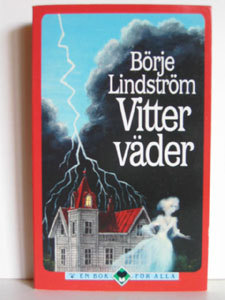

The second re-read I did last year was of a book I read and owned when I was little. It's called Vitterväder (Wights Weather) by Börje Lindström. It's a ghost story for young adults and I remember really liking it for its down to earth writing style. I decided to buy myself a copy as I've lost my old one somewhere and see if it still held up, and it definitely does. It has the right amount of creepy yet doesn't over-embellish but keeps it clean. I always enjoy books that can tell things with less words rather than more.

Another book I am glad I read last year was Frågor Jag Fått Om Förintelsen (Questions I've Been Asked About The Holocaust) by Hédi Fried. Hédi Fried is a Holocaust survivor born 1924 in Romania and she has worked many years with different kind of educational work regarding the Holocaust. Frågor Jag Fått Om Förintelsen is a straight-forward Q&A with things people have been wanting answers to regarding the Holocaust when she has been out giving speeches. The subject matter makes it a dark read, but it's a necessary one. These things will always be difficult to process and understand, if not impossible, but this book breaks it down to just the thoughts that pop in to people's heads and it's a great read.

My gaming year of 2019 was pretty good actually...

It started off absolutely brilliantly with Return of The Obra Dinn. What a great game. The only bad thing about is that it's a one-off, you can't experience the magic on a second playthrough anywhere near as it is the first time you play it - but that only goes to emphasize what a special game this is. Original idea executed amazingly, this is fun and enthralling from beginning to the end.

Cause of death - really bad luck.

I also played Bloodstained and enjoyed it a lot. Bloodstained is a good example of how you can't capture lightning in a bottle twice, but by golly if you can't have fun with it a second time around. Borrowing very heavily from the Castlevania Symphony of the Night formula, Bloodstained decided to add more of everything and I think it worked. A lot of the extra stuff wasn't really necessary but it also didn't detract from the core game so I didn't mind it. The main game was competent enough and kept my interest throughout.

Talking about re-treading old footsteps as I seem to have done in my book reading last year, I also replayed Resident Evil 2 in a way. Resident Evil 2 remake was finally released, more than 15 years after it was first announced (yes, it was first announced when the first Resident Evil remake was released). The first Resident Evil remake still stands as the template on how to not just make a game justice but actually improve upon it with modern tools and I was definitely worried that Capcom could not pull that off twice. I am so glad I was wrong. The Resident Evil 2 remake embraces everything that made the original great and adds new flavor to the formula to keep the familiar feeling yet making it fresh. Kudos to Capcom for pulling it off again. Let's hope they can do a hattrick with Resident Evil 3 Nemesis.

2019 was also the year that saw the return of WoW Classic and I can't tell you how much fun I've been having with it. I still play it though literally no one else I know does (or at least not on my server). Even my bf who played it a bit the first couple of months, and we were levelling paladins together, cancelled his subscription last month. Me, I am trudging along in my loneliness. It's not that bad actually, and to be fair it's pretty accurate to my original WoW Vanilla experience. Back then I only knew my brother who played and for the first nine months we shared an account, so playing together wasn't an option. Also he was all into Pvp and I really wasn't.

I've missed this place.

At the moment I play my different alts (have pretty much one of each class) and haven't even made it to 40 on any one of them yet. I run around and do quests and the occasional dungeon while listening to podcasts. I love that you're often forced to ask other people for help and most of the time I only meet nice and funny ones. I am taking my time to get to endgame because I know that's probably when I hit my stop button. I never really raided in Vanilla and I don't have much desire to do so this time around either. On the other hand I know endgame content is more accessible this time around, for whatever reason, so I wouldn't mind giving it a shot. We'll see when I get there, because at this rate of levelling it is going to take me another half year at least, and I am perfectly fine with that.

If I were to also look ahead a bit...

I am mostly stoked for Cyberpunk 2077. I wasn't too fussed about it really until I started playing the Witcher 3. The only reason The Witcher 3 is not on my "awesome games I've played this year" list in this post is because I am nowhere near done with it yet. Spoiler alert, it will be on my list for 2020, if I remember to make one. While I really enjoyed The Witcher 1 and 2 and so I knew CD Projekt Red clearly could do great games, I put it down to the IP rather than the craftmanship. But now that I have played X many hours in The Witcher 3 I have a completely different idea of the skill set of these developers. Cyperpunk isn't something I am crazy into but definitely a genre I enjoy, so now I am really looking forward to trying this game out. As I am writing this, CD Projekt Red just announced that the game has been delayed until September and to me that's is practically good news since I still need more time to finish off The Witcher 3 before I can delve into Cyberpunk 2077.

Can't I just play as Geralt in the future?

Years and years ago, it feels like now at least, I heard about Final Fantasy VII remake being a thing. I decided to buy a ps4 pretty much on the basis of being able to play that game. Years later we are all still waiting as you know and I was starting to become pretty sure that the game wasn't even going to make it onto this generation of consoles but that I would have to invest in a ps5 as well. Well... it is coming out this year now finally right? Did I get that right? I don't even know anymore and I don't even know if I care. Maybe one day it'll come out and when it does I will be a happy camper and play it.

On a personal scale life is absolutely great and on a global scale I am panicking, but at least there are some good gaming and reading hours ahead of me...

Any of you have some personal favorites of last year? Book recommendations are definitely always welcome!

Images from Youtube.com, goodreads.com, pcgamer.com, myogaming.se

Tuesday, March 6, 2018

Koudelka - Horror JRPG (PSX) - Review

Resident Evil RPG.


Ever wondered what Resident Evil might be like as an RPG? Do you think the horror RPG genre is criminally underused? If your answer to any of those questions is yes you should probably check out Koudelka (and quite possibly already have) - a horror JRPG from 2000 (in the west).

I didn't know much more about Koudelka than that myself, only having watched a friend play it for a bit way back when (probably only a few years after it was released). I only remember thinking it looked like a fun RPG and then the thought lied dormant in the backwaters of my mind until a year ago or so when I decided to buy it (and it still took me until this year to actually play it).

My expectations were of typical JRPG on PSX type i.e many play hours, long loading times, either incomprehensible or cliché stories/characters, lots of grinding - even if you've played no more than any Final Fantasy game you are probably also familiar with the drill.

You play as Koudelka, a spiritual woman drawn to the Nemeton Mansion and Abbey since someone inside is calling out to her (you know, spiritually). The place is fictional but set in Wales, because of this the characters are portraid as English-speakers and the dialogue was originally written for the English language (not that that helps it much in terms of quality). She almost immediately finds Edward, a thief who's there to find loot and not much after they're joined by James, the sanctimonious priest who is there because he is pretty involved in the reason the abbey is haunted by all things horrible in the first place. The characters pretty much despise eachother throughout the game and only very reluctantly decide to help each other out. None of them is especially likeable either, although James definitely stands out as an extreme "holier than thou"-kind of guy. For someone spreading the word of love, he doesn't hold much love and the fact that a lot of his backstory gets rolled out throughout the game does little to make you like him more.

This guy is a bit of a prick. But a good spell caster, so I forgive him.

The story overall doesn't make much sense, and not even in the "ok they decided to reanimate the dead but why is everything so convoluted and illogical in this place?"- kind of way deployed by beforementioned Resident Evil. The basics are similar, someone gets resurrected and shit gets out of hand. Only here it's a man called Patrick who loses his wife Elaine when she gets murdered by a burglaring thief. Both Patrick and the groundskeeper Ogden go a bit nutty from this, Patrick swears to resurrect Elaine (by killing a truckload of women for their blood), Ogden swears to murder anyone who dares enter the grounds (because he is just nutty). In the end a lot of people die, they only manage to resurrect Elaine's body but not her soul and that body is running rampant. So are all the dead people's bodies and souls too for that matter. You find out Elaine is the one who called Koudelka to the place to fix things, while James also loved Elaine and was a friend of Patrick's.

While this could've been enough in itself, a couple of other characters are thrown in supposedly to flesh things out and harken to the abbey's long history- unfortunately they only make things more confusing. We meet the spirit of Charlotte, a little girl who was killed on the grounds. She is not happy and pester the team early on in the game, but nothing much is done with her. We meet another thief (and kill him). We meet Roger Bacon who has been alive in the abbey for hundreds of years (and looks the part). All of these people are thrown in to further the story in some way, but aren't given much substance on their own.

Personally I love the story of Resident Evil, so convoluted and confusing doesn't have to be a bad thing if you can still create interesting stories within that world (for example the fate of the Trevor family in RE remake). While the story in Koudelka has potential, and the surrounding abbey definitely does a great job setting the mood (and the enemy designs are great) the story feels rushed and so you barely have time to start caring before it's all over. I finished this game in about 14 hours, and one hour of that is the final boss encounter alone! Factor in long loading screens within battles especially and the actual story probably only holds half that time in content. There are a lot of cut scenes too, holey moley are there cut scenes. No wonder this game is on 4 discs, I swapped the first one after only three hours of game time. A quick search on Youtube show that over 1,5 hour of the game is made up of cut scenes (one 8 minutes long), and while they further the story (more or less), it leaves very little for actual gameplay.

You won't see much of these people. Or anyone else.

Which is really unfortunate since the gameplay probably is Koudelka's strongest asset and when the credits were rolling I found myself wanting to spend so much more time in this game. The lacklustre story, the unlikable (but still enjoyable) characters and loading times all together still couldn't remove the fact that Koudelka is in the end a fun game to play. Firstly, it keeps battles interesting by always keeping a very balanced challenge level. While you never feel overpowered (unless you backtrack to low level areas) you never feel like the battles are a chore or heave a sigh whenever the battle screen loads up. Which is otherwise not uncommon in JRPG's with random battle encounters. In fact, I only felt I needed to grind some levels once, somewhere mid-game, to make things run a tad bit smoother. The game is extremely generous with save spots of which it has two different types - the "regular" save spots, which will also heal you up, and "temporary" save spots which don't (and of which you can only have one). These save spots can sometimes be in adjacent rooms so also unlike some JRPG you rarely have to wonder when booting up the game if it's going to be a forced two hour session.

While the regular save spots almost always have a boss guarding them (thus this game has many bosses), it's always flagged in advance making sure you don't run into one of them unknowingly. You also get full health and mana from levelling up, and level up you will - a lot. Every two or three fights I found myself getting another level, and like I mentioned this was even though I felt I was otherwise at the right level for the encounters. Every level up you get four points to spend on your stats, and it is wise to keep a fair balance. Giving yourself too much magic resistance goes two ways for instance, meaning while you will resist hostile magical attacks you will also resist healing effects.

Let's back up a bit to battles though, some of the critique of this game (which received mixed reviews) were the battles. They weren't designed by Hiruki Kikuta who did the rest of the game and so many people feel like they are out of style and touch with the rest of the game. While I can understand the people who feel that way, I still think the battles are fun. You move your characters around on a grid, casting magic or using your weapons. Most weapons, except ranged, only take about 10-15 uses before they break which means using your bare fists is the best way to go for regular encounters. The fact that you have no opportunity to restock on your inventory meant I was scrounging for everything, and so had a ton of unused items by the time I had finished the final boss. Because there are save spots everywhere and you get back all your health and mana from every level up (which as mentioned is frequently) I rarely found a reason to conserve and hold back on using spells. Pretty much every enemy can silence or poison you (poison is very weak though), but fortunately you don't retain any status ailments after battle.


The only few things that annoyed me about the battle system was that when one of your character dies (this only happened to me twice in the game), if the enemy has moved passed the point where the character fell (which they almost certainly will) you can't resurrect them anymore until you push the enemy back. If dying was more of a problem in this game that could've been a real nuisance. Also it's rarely particularly clear what resistances enemies have, so you'll end up accidentally healing them every now and then. You also have the option to "wait" with a character, presumably to find a better time to act but sometimes it will go back to that same character (at least) four times in a row. But overall, even though this game has random encounters like so many JRPGs, the battles never became troublesome or boring for me.

The game has some puzzle elements, again similar to the style of Resident Evil (think keys and gems being put in the right places to advance) and overall they flow well. Only one about walking on runes on the floor in a certain pattern to unlock a door gave me a bit of a headache. I can see people having more trouble with actually being able to distinguish what they can interact with in the surroundings than figuring out the puzzles, as the classic PSX graphics really can make some scenery very obscure. They've tried to solve this in game by having Koudelka turn her head towards things of interest, but sometimes even that is hard to make out. In the end I found myself just crawling every wall, clicking X frantically until I had searched the entire room, and quite frankly I found this working fairly well. Again, this wasn't something I found bothersome but rather something I expected from a game of this era.


There were only really two songs that stood out to me, and those were the Battle Theme and the Boss Battle Theme (there are in fact more battle themes than just those two, but they sort of blend together). Not necessarily because they're so good, but because you'll get to hear them so often. As so much else in this game they never ended up grating on me but meshed well with the rest of the tone of the game. When I first heard them I remember thinking that I didn't find them to be suitable as battle themes, but they really grew on me over the course of the game.

For better or worse Koudelka isn't much of an investment. You won't have lost much on giving it a try, but it also won't give you much to do before it's over. Since I enjoyed the game I found this to be quite a let down and I would've loved to explore this world more. In the end though that disappointment comes from the fact that I had really fun with it. It was well worth the few hours I got to spend with it.

Sunday, July 3, 2016

Throwback Game Review - Suikoden

By the way, there will be spoilers...

Suikoden is another RPG series I had completely missed out on until recently. Well, that is partially true since I actually bought Suikoden V when that was released, but was gravely disappointed with it and never made it more than a couple of hours in. But eventhough I had tried that game, or maybe because of it, I knew very little about the game series. I guess that game (Suikoden V) also somewhat dampened my interest to know more about it, at least until I had checked out other, more interesting looking series first. That changed some month ago however when I was listening to one of my VGM podcasts and one of the hosts was hailing the Suikoden series, especially the first two and recommended everyone to give it a try. Maybe that was all it took to make me revise my first impression, I like to think that Suikoden had just slipped my mind a bit and this reminder is what I needed to think "you know what? Why not?". So there I was about a month ago, booting up Suikoden and having not the faintest idea what awaited.


I wasn't lying when I said I knew little about the series. I had (and in fact still don't, since I've only finished one game in the series so far) no idea how the games tie in to eachother. Is it like the Final Fantasy series where they merely borrow elements of eachother or more like the Star Ocean series where they're in the same universe? I knew nothing of the gameplay or style of story (although being released in the mid-90s I had a general idea). I was curious and excited to see what was awaiting and hopeful that it would be something that held up more than 20 years after it was first released.

What can I say, other than - yes, it definitely does. What a great game Suikoden is. It has a lot of interesting elements that could've been handled so much worse than they are, instead I found that a lot of my initial fears upon exploring the gameplay were completely removed as I realized the creators seemed to have been actually focused on making the game present itself beautifully.

Firstly, it's a relatively short game. I clocked in at under 17 hours, this is to be compared with for instance Grandia (released 1997) which I am also currently playing where I have more than 30 hours of gametime and no end in sight. The explanation for this is simple however, Suikoden is storywise one of the least confusing jRPGs I have played in a long time. There are just very few timesinks and instead it is efficient. The amount of times I found myself wondering what I needed to do next could be counted on one hand and probably all be attributed to me being distracted or otherwise failing to read easy-to-understand instructions. In this sense you might call the game linear, but oh what a relief that is. Whenever I play RPGs from this time period I dread the amount of time I am going to spend randomly running around the map trying to find the next place to trigger along the story. This happens very rarely in Suikoden as it is heavy on cutscenes moving you ahead - but don't worry, we're not talking MGS heavy. These cutscenes are neat and short and just what you need to keep your interest and to further the story. Far from interrupting, they help build up the characters and your relation with them.


Speaking of characters, there are 108 that you can gather. This was one thing I had some worries about going into the game, as I had read of it prior to playing on the Wikipedia page. I was very curious to see how they could make you care about any character when there were 108 to choose from? And wouldn't that just make everything feel cluttered? There are other games with a big cast, but I can't think of any that even comes close to 108. This turned out to be one thing the game handled without any problem, in fact it turned it into one of the best and most unique elements of the game.

This brings me to the story, which is straightforward and fairly standard. The empire is evil, you must thwart the empire. In fact if I would have anything bad to say about Suikoden it would be that the antagonists are nowhere near fleshed out enough and because of this you never really get the same feeling of success when you finish the game that beating a maniacal bad-guy can do. Rather than being the world-saviour it feels like Suikoden chooses to cast you in a more low-key role, as the commander of a rebel army that sets out to liberate the lands of the empire. This is one of the few jRPGs I've played where the entire world isn't even part of the story - for all I know there are lands on the other side of the planet that don't give a crap about me and my battles. I don't have a problem with that though, I find it kind of endearing whenever you're NOT cast as the planet-saving-hero, especially in these pre-2000 RPGs where that was still a very common theme. And the story on the good-guy-side allows for quite a lot of emotions - I haven't seen this many main characters killed off since Game of Thrones. My only qualms with the story are, like mentioned, that the main antagonist are barely in it. Kefka springs to mind as a good comparison - Suikoden does a lot of things better than Final Fantasy, but this is not one of those things.

Although maybe a bit over-the-top...

As the commander of the Liberation Army you get your own fort however, and this is where the 108 characters actually come in handy, believe it or not. Not only does the sheer amount allow you almost endless tinkering with party setups, if that's your cup of tea - a lot of the characters you recruit end up having a practical role in your fort. By recruiting you can make sure you have access to an inn, a blacksmith, a teleporter, an elevator... you name it. I love this idea and it is executed superbly, characters necessary for progression will be recruited to you through the storyline, but I only got some half of all the possible characters so there is so much more to explore. It is a completionists heaven.

But what about the problem with the leveling, you may ask? Surely you would never want to swap party-members, since whomever is left behind needs to be leveled, wasting precious time? Yes, this is another thing I was worried about when I started playing the game, especially since the game will often force characters into your party for story purposes, characters that may well be 40 levels below your main character. But even this Suikoden has solved brilliantly - leveling is extremely dynamic where low level characters will receive a huge amount of experience for high level enemies. This means it will only take you a handful of battles before your low level character is up to date. What the character swapping will have you spend a lot of time with however, is gear swapping. Because characters were often swapped around beyond my control I stopped actively gearing new party members because I never knew how long they would get to stay in my party. Instead I used a system of hand-me-downs, where I only geared my main character and passed down whatever he replaced.

This might sound tedious, but it's only a minor issue. Furthermore, gear doesn't seem to have a huge impact on the game - it's definitely important, but it won't make or break a fight as long as you have a few characters with good gear (you can control six in total).


Speaking of fights, they are overall fun and never wore on me. Some of the boss monsters really required some tactical thinking but in general I never felt like the game was overly difficult. Not once did I have to grind levels to manage a certain area, which I can only put down to the clever experience system, always making sure your characters are quickly leveled up to match the area they are in. I also commend any game that gives you an "auto-battle" feature, especially in a game where there are six people to control. Gold star to Suikoden for this, as it really comes in handy.

When you're not auto-battling, you will notice that your character setup changes your options during battle. Some characters can team up and do combo-attacks together, and I also read (unfortunately after finishing the game, so it was never something I did myself) that you can do combo-magic. Magic on the other hand was something I never really got the grips on. Unlike most RPGs that have dedicated mages, this game allows you to give any character a rune that will allow them to cast certain spells (some characters have locked runes that can't be swapped, some runes do other things than allow spell-casting). There is no mana, instead each spell has a certain amount of uses, similar to FFVII, only way way fewer of them. I never got any spell to break double-digits in uses, and as such I very rarely used them, but saved them instead for the harder fights. For instance, there is no healer as such in the game, rather you will mainly rely on using potions to get through fights (there are runes that give healing spells, but the uses are too few to be used on a regular basis). Potions are cheap and easy to get by so rather than becoming a problem this allows for every character in your party to be a healer - clearly the designers did not want to limit you when setting up your party (other than for story reasons). I really liked that. So overall I felt like the magic worked fine and it especially gave me the feeling that there was a lot of exploring and experimenting to be done with the different runes, just as with the party set-ups.

There is so much more to be said - I could for instance talk about the variatons in battle they throw in, sort of mini-game style, to change things up a bit, I could talk about the graphics and how some of the cutscenes have the sweetest pixelwork I've seen in a long time - but if I were to wrap it up I guess I would have to say that I really enjoyed it and I definitely recommend it. The gameplay basically begs you to replay the game and everything is set up for you to want to.

Sunday, May 29, 2016

Odds and Ends - On Wolf Hall, Castlevania and Suikoden

Just a couple of bits and pieces for this post;


I just finished Hilary Mantels "Wolf Hall" today and must say I am quite underwhelmed. It has been hauled as a masterpiece by... people. I'm not really sure who says so, but she did receive the Booker Award for it so clearly there is someone who likes it. For some reason I came across the TV-series first and then found out it was based on a book. As I quite like historically based fiction I decided to watch it and absolutely loved it. Mark Rylance, whom I had never heard of nor seen before, was great in it and I immediately started watching a load of other movies he's been in. I also decided I wanted to read the books the series was based on to see if it had more to offer, as is often the case when books become series or movies. Unfortunately that is not so here. If you have any interest in the era or historical stories overall, I definitely recommend the TV-series over the books as it is more comprehensible and as such a lot more enjoyable. Mantel simply employs a writing style which might be commended for it unconventionality, but it often left me confused as to what was going on and who was doing what. Apparently this is something other people have found a problem as well, so it wasn't just me being slow-witted (this time).

Overall the story is a good one though, based in facts but Mantel has of course taken some liberties with the characters and she's done a fairly good job there. The little quirks she's given these historical figures may be somewhat founded in actual sources, but either way they feel believable and justifiable in the context. Apparently she aimed to set the reader directly into the event of things, to make you feel like you're there. I do feel like she has succeeded in this but some of the comprehensibility has been lost instead. She's removed too much exposition, and I'm usually the last person to want more exposition. Commendable effort but still, watch the series rather than suffer through the book is my recommendation.

I also just finished Castlevania: Symphony of the Night and that on the other hand was just as good as I've been told it to be. It had a few very minor issues, so small they barely even deserve to be called issues to be honest. For instance the way to use items is a bit round-about and I missed the slide move that is in some later Castlevania instalments. But overall it's the masterpiece it's being hailed as, especially considering it was pretty ground-breaking when it was released. There isn't much to dislike actually, except maybe the dialogue in general and the voice acting in particular. The artstyle is great, the music is absolutely phenomenal and the gameplay is great fun. If you haven't played it for whatever reason you really should. It's just too bad it's so expensive to get hold of nowadays.

One of the VGM podcasts I listen to mentioned Suikoden 1 & 2 and I realized I've only ever played Suikoden 5 which I've tried to get into several times without succeeding. I can't even put my finger on what it is that makes me lose interest only a few hours into the game, but it has a slow start (although not as torturously slow as Star Ocean 3), boring characters, story, gameplay... well yeah it doesn't really have much going for it. I've only gotten 1,5 hour into Suikoden at the moment but so far so good. I already like the characters better, the story seems pretty standard so far and the gameplay is promising. I definitely prefer the Playstation sprite work over the ps2 polygons, there is just something about the ps2 era RPG polygon artwork that really turns me off playing those games. Star Ocean 3 as already mentioned is another game where the aesthetics really don't appeal to me, Breath of Fire Dragon Quarters had this issue too somewhat. Final Fantasy X just barely gets away with it, but it has so many other issues... well I digress.

I intend to check out at least Suikoden 1 & 2, and if they are fun I'll see if I'll move furher down the list until I hit 5 at which point I might give it another chance. Who knows, maybe having played the other games will make the fifth one more enjoyable?


I've also hit a metaphorical brick wall in Shin Megami Tensei: Devil Survivor. I've come across a boss event that is silly difficult, especially compared to the challenge so far, and I was certain it was the final event. I thought it would make the game a bit short so I decided to see if I was right. I was not, of course. Turns out this event is just barely half way. There is still loads of game left to play and I want to get there! But ramming my head against this boss, which has to be killed in a very specific way, is wearing a lot on my patience. What'll happen though is that I'll stop playing it for a while, get back to it, one-shot the boss and wonder what I made such a fuss about. I've also got SMT: Devil Survivor 2 and SMT: Digital Devil Saga 1 & 2 to play after that but that feels like far off in the distance now.

Sunday, March 20, 2016

An Unfinished Look At Grandia - Admirably Confusing

Grandia II is one of my favorite J-Rpgs, but considering that, I've spent surprisingly little time with the other instalments of the series. I know absolutely nothing about Grandia III and Grandia Xtreme besides that they exist and until recently that was also true about the first game. Then my bf gave me Grandia for my birthday last year and I was excited to see where Grandia II had come from.

It seems the rule of J-Rpgs to not be direct sequels to eachother, but rather take place in the same world concept - Final Fantasy is a good example of this, Star Ocean another. The characters will be different, the world will be different, but there will be core concepts that are similar. In Final Fantasy it's mogs, someone named Cid and chocobos. For the first two Grandia (because I haven't played the other two and can't say) it seems to be primarily the style of combat, because other than that they don't have very much in common.

defconsoft.co.uk

I haven't finished the game yet, eventhough it's been over half a year since I got it. I definitely don't dislike it, it's actually quite fun but quirky (more about that shortly) but it's currently the only console game I play and so it means setting up a bit before getting started. It's probably the lamest excuse you'll hear all week coming from someone trying to avoid doing something they actually enjoy, but there you have it. Another big factor is that it's true to the J-Rpg style and has save points, something that I am trying to avoid since I'm in a position where I need to quit what I am doing at any given moment. It basically means I need to know that I can devote an hour (the longest I've played without reaching a save point was two hours though) and that just doesn't happen often enough.

I've at least come to the second disc, so you'd think I'd be a good way into the story. What makes Grandia a bit special from your average J-Rpg however is that it has a pretty original way of playing out the story. You play as Justin, a tween something kid who wants to be an adventurer like his father so sets out to fulfil his dream of being one. Early on in the game it turns out Justin has a special artifact left by his dad, which puts him on the track for said adventure and more than a disc in that is still where the story is at. You find out there is an old civilization that's long gone, Justin tries to find it for no other reason than "why not", he finds some friends on the way that don't seem to have much better things to do with their time either and the story doesn't progress much from that point even after 30 hours of gameplay.

I am a bit torn as to whether I love it or don't love it so much. On the one hand I find it extremely refreshing to play a J-Rpg that doesn't cast you as the savior of the universe within the first half hour of playing, where the evil is the evilest there ever was and wants nothing but death and destruction for no reason. In Grandia you play someone who just wants some fun and who finds himself in interesting situations and with interesting people because of it. There isn't really a main antagonist and definitely not an EVIL DARKNESS that you need to collect [insert generic crystals here] to thwart.

At least not yet - of course huge disclaimer for the fact that I haven't actually finished the game yet and so fully expect this storyline to come crashing down on me sooner or later, it is a J-Rpg after all. It is very surprising however how long the game designers decide to hold out on actual suspense. Like I said I am roughly 30 hours into the game and there is still very little to go on. They do some setting up early on that leaves you with promises but it quickly turns into the feeling that this is just a game about exploring.

They also level completely unevenly - gamingbus.com
But like I said, it is far from bad. The combat style I love from Grandia 2 was first used in Grandia. Firstly it means there are no random battles but enemies can be seen and generally avoided on the adventure screen. Once you do enter a battle, your characters and the enemy characters activate depending where they are on a meter. Once the meter reaches the end your character can choose to do all the regular stuff like use a magic or item, attack or run for instance. The big difference to other RPGs of the time like beforementioned Final Fantasy is that your characters aren't stationary but run around (very similar to the "Tales of" games) which adds another level of tactic to the fighting. So far the game has been pretty easy but the fun combat makes sure that you never tire of entering a battle. The game also does a Phantasy Star 4 in that it provides you with a very strong character mid-game, further alleviating exploration. Overall the style of battle seems to encourage an explorative behavior and there are a lot of items lying around waiting to be found.
gamingunion.net

The characters are also very likable. They're not particularly memorable in the way Sephiroth or heck even Millenia from Grandia 2 are. In fact for this post I had to google what their names were because they're so generic you forget them immediately (mainly Justin, Sue and Feena). But they're easygoing and fun, they never grate on you and eventhough the dialogue is simplistic it never makes me ashamed of the writers like in FFX.

The areas are fairly varied yet graphically drab, I don't expect or demand much else from the Playstation however and it's not really something that bothers me or takes away from the gameplay. They've made a lot of the surroundings interactable adding light puzzle elements to the game (and we're talking very light). A lot of other J-Rpgs developers could take note from the travel system - the world map is basically just areas that you've visited and once you've been to a place you can travel back to it from anywhere on same contintent. Running on the world map is such a huge time sink in some Rpgs that they've pretty much completely done away with in this game. There is also an arrow in the game to point you towards your next objective, which is a brilliant idea! Unfortunately it doesn't always update which had me running lost for quite a while before I realized how it worked.

So I am definitely having fun with the game, but I can't help but thinking in the back of my head "what is this game even about?". It feels so without direction I end up both admiring it and get confused by it. It's like the game creators thought to themselves "why can't we do an rpg where you just run around and do fun things, rather than try to avoid cataclysm?". And yeah I guess, why not? We'll see what I think once I am done with it.